Hybrid Data Management Strategy for Enterprise AI Success
Enterprise AI depends heavily on data strategy—not just on advanced models or algorithms. As AI systems increasingly drive core business operations, organizations must ensure their data is accessible, trustworthy, and well-governed across on-premises, private, and public cloud environments.
Research from Enterprise Strategy Group reveals a critical challenge: only 48% of organizations trust their data enough to confidently use it in AI applications. This trust gap is largely due to data being fragmented, inconsistent, and poorly governed. Without a solid data foundation, AI projects risk delivering inaccurate results and damaging business outcomes.
Why Hybrid Data Matters
The foundation of any AI initiative is reliable data. For example, a customer-facing AI knowledge base will fail if it relies on inaccurate or incomplete data, leading to poor customer experiences. Because about two-thirds of enterprise data still resides on-premises, AI solutions must handle both structured and unstructured data across multiple environments.
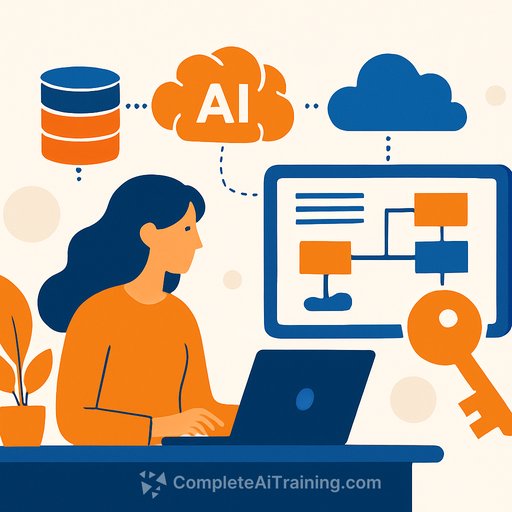
A hybrid data management approach enables organizations to access and govern data wherever it lives—whether in legacy on-premises systems or cloud platforms. This approach supports training large language models and deploying AI agents that need real-time, diverse data sources.
Industry Approaches to Hybrid Data Management
- Cloudera’s True Hybrid Vision: Delivers a unified data fabric that securely moves data across all environments. It includes universal security policies, centralized metadata management, and governance, along with essential data warehouse and lake capabilities. Cloudera AI also integrates leading AI technologies, such as Nvidia microprocessors, for developing and testing AI applications.
- Oracle 23ai Database: Offers hybrid database capabilities across environments with high performance on the Oracle Exadata platform. Supported by hyperscale partners like Google Cloud and Microsoft Azure, Oracle 23ai supports both structured and unstructured data with unified security, meeting diverse AI use case needs.
The Business Case for Hybrid
According to Enterprise Strategy Group, 66% of organizations either maintain or plan to adopt hybrid data management. Different AI use cases demand different environments: real-time fraud detection requires immediate access to on-premises data, while generative AI applications benefit from scalable cloud infrastructure and large data pools.
As AI expands into departments such as HR, marketing, finance, and logistics, maintaining consistent, reliable data across all environments becomes critical. For organizations with on-premises infrastructure, hybrid data management is no longer optional; it’s a business necessity. Bringing AI to the data, rather than moving data to AI, reduces costs and complexity while improving governance and security.
Looking Ahead
Hybrid data management is common but often misunderstood in the AI context. While many associate AI with the cloud, the reality is that AI must operate where the data resides. Enterprises are shifting to hybrid strategies to balance cost control, security, governance, and scalable AI resource access.
By adopting platforms like Cloudera and Oracle, organizations gain the agility and control needed to build dependable data foundations. This approach supports unique AI applications powered by contextual enterprise data—delivering innovation alongside sustainability and scalability.
For those interested in deepening their knowledge of AI and data management strategies, exploring targeted courses can add practical skills and insight. Visit Complete AI Training’s latest AI courses for relevant learning opportunities.
Your membership also unlocks: