
AI news ·
Hyperscayle publishes two-category framework for AI agents in B2B revenue operations
Austin firm Hyperscayle released a framework splitting AI agents into two types: personal agents for individual contributors and universal agents for background operations. Mixing them up, the firm warns, leads to tool sprawl with no clear results.
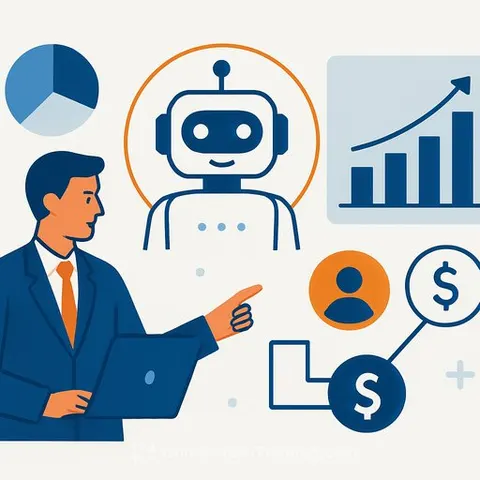
Revenue Operations Firm Releases Framework for AI Agent Investment
Hyperscayle, a revenue operations consulting firm based in Austin, has published a guide dividing AI agent investments into two categories to help B2B sales and marketing operations leaders decide where to spend resources in 2026.
The framework separates AI agents into personal agents and universal agents, each requiring different ownership structures, data policies, and rollout strategies.
Personal Agents: Built for Individual Contributors
Personal agents are configured for salespeople, marketers, and customer success managers to work faster and more effectively in daily tasks. Hyperscayle recommends building these on a shared core designed centrally by RevOps or enablement teams, with individual contributors customizing the edges.
This approach maintains consistent brand standards and process guardrails across teams. Practical applications include:
- Automated daily briefings for sales representatives
- AI-drafted follow-up emails
- CRM updates from call notes
- Pre-meeting account research pulled overnight
Universal Agents: Continuous Background Operations
Universal agents run continuously in the background as part of the RevOps technology stack, handling repetitive operational tasks too nuanced for rigid automation. They operate on top of an organization's systems of record without being tied to any single user.
Common use cases include:
- Continuous enrichment of strategic account data
- Job-change tracking for key contacts
- Context-aware lead routing
- Proactive deal-slip alerts
Hyperscayle recommends that RevOps own and govern these agents with the same rigor applied to any production system.
The Mistake Organizations Make
Many AI RevOps programs stall by treating personal and universal agents as the same type of investment. Organizations that conflate them tend to accumulate tools without a clear picture of what changed in their operations.
The firm outlines a five-step sequence for building an agent program: start with universal agents focused on data quality, run a contained personal agent pilot with one team, and expand deliberately as patterns stabilize.
"The orgs getting real value out of AI agents invest in both layers deliberately," said Ben Mohlie, co-founder of Hyperscayle. "Picking one and hoping the other shows up on its own does not work."
For operations professionals evaluating where AI fits into existing workflows, see AI for Operations and AI for Sales for additional context on agent applications across revenue teams.