Gen Z, AI, and the entry-level squeeze: what HR needs to know
The entry-level market is under pressure. Unemployment among recent college grads is around 5.6%, near a decade high outside the pandemic. At the same time, high-profile leaders keep warning that AI will shrink junior roles. It's a tough mix for candidates-and an important decision point for HR.
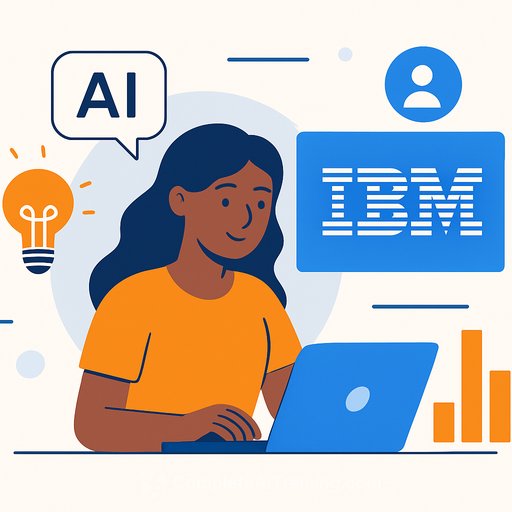
Some employers are choosing a different path. IBM says it's ramping up Gen Z hiring-tripling entry-level roles, including software developers-because the companies that keep building their bench now will win in three to five years. That stance runs counter to the "AI replaces junior talent" narrative, and it puts job design and training at the center.
Why cutting entry-level backfires
On paper, trimming early-career roles can help short-term margins. A Korn Ferry survey even found 37% of organizations plan to replace junior roles with AI. The problem shows up later: no internal pipeline, higher costs to poach mid-level talent, and longer ramp times for outside hires who don't yet know your systems or culture.
HR has to make the case. If AI takes low-level tasks off team plates, you need new hires who can partner with those tools and grow into managers who know your way of working. That's cheaper-and safer-than betting on the market to provide mid-level talent on demand.
What IBM changed in job design
IBM's HR chief said many classic entry-level tasks can be automated, so they rewrote roles with AI fluency baked in. For software engineers, that means less routine coding and more time with customers and problem framing. For HR staff, it looks like supervising and improving chatbots instead of answering every ticket by hand.
The intent is simple: build skills that compound. Put juniors on higher-value work earlier, teach them to use AI responsibly, and create more long-term value for the company.
Signals from other employers
Dropbox reports Gen Z shows up with stronger AI skills than older cohorts and is expanding internships and new grad programs by 25% to capture that edge. Cognizant's CEO plans to grow entry-level hiring too, arguing AI lets well-coached school graduates "punch above their weight." The theme is consistent: broaden the base, speed up development.
AI literacy is the new baseline
According to LinkedIn, AI literacy is one of the fastest-growing skill areas in the U.S. If your junior pipeline can prompt, evaluate model outputs, and connect tools to workflows, your teams move faster and make fewer mistakes.
LinkedIn's AI at Work research is a useful snapshot to share with leaders who want the market data.
The HR playbook: Build an AI-first early-career pipeline
- Rewrite job descriptions: Replace generic "detail-oriented self-starter" lines with clear AI expectations-prompt writing, output critique, data hygiene, escalation rules, and customer empathy.
- Assess the right skills: Use work samples where candidates show how they'd use a model to draft, code, analyze, or summarize-plus how they would verify and correct it.
- Onboard for compounding gains: 30/60/90-day plans that mix tool training, customer exposure, and a small automation project with measurable outcomes.
- Set the tooling and guardrails: Standardize approved AI tools, define acceptable use, privacy rules, and red lines. Make audit logs and human-in-the-loop checks non-negotiable.
- Mentor and rotate: Pair juniors with managers who coach on judgment, not just tasks. Rotate through support, ops, and a customer-facing pod to build context quickly.
- Measure what matters: Track time-to-productivity, percent of task hours automated, quality/accuracy deltas, customer satisfaction, and rework rates.
- Plan the ladder: Map 18-24 month progressions from associate to mid-level with skill checkpoints and project ownership milestones.
- Budget smart: Shift some spend from external hiring and contractors into training, licenses, and manager enablement. The yield shows up in ramp speed and retention.
- Partner upstream: Build college programs, apprenticeships, and returnships that focus on AI + business context, not just tool familiarity.
Role design examples (AI in the loop)
- Software engineer (entry): Use a code assistant for boilerplate; focus human time on architecture choices, edge cases, and customer constraints. KPI: defects per KLOC and cycle time.
- HR coordinator: Let a chatbot draft first responses; the human handles escalation, tone, and policy nuance. KPI: first-contact resolution and CSAT.
- Business analyst: Models summarize raw data; the human frames the question, challenges the summary, and builds the narrative. KPI: decision lead time and forecast accuracy.
- Customer support associate: AI suggests replies; the human verifies, personalizes, and captures feedback to retrain the bot. KPI: handle time and quality score.
What to tell your CFO
Replacing juniors with AI may shave costs this quarter but creates a mid-level gap that's expensive to fill later. Inside hires ramp faster, retain better, and carry institutional knowledge AI can't replicate. The math gets easier when you show improvements in time-to-productivity, quality, and customer metrics tied to AI-assisted workflows.
Quarter-ahead action plan
- Set a 2026 workforce target mix for junior/mid roles; protect a baseline of entry-level hiring.
- Update three priority job families with AI tasks, competencies, and guardrails.
- Pilot AI fluency assessments in your next campus or apprentice cohort.
- Launch a manager enablement sprint on AI supervision and feedback.
- Expand internships by 20-25% where you can give real project ownership.
Upskill fast
If your team needs a structured path to AI fluency, consider curated training that maps skills to roles and projects, such as the AI Learning Path for Training & Development Managers. A focused catalog can accelerate onboarding and standardize best practices across HR, ops, and product teams.
- AI courses by job role for building role-specific learning paths.
- Popular AI certifications to set common benchmarks for early-career talent.
Bottom line
AI is stripping routine work out of entry-level roles. That's your cue to redesign jobs, not remove them. Companies that keep hiring juniors-and teach them to work with AI-will have the deepest bench of capable managers in a few years. That's a durable edge you can start building this quarter.
Note on IBM's stance: IBM's CEO has publicly pushed back on the idea that AI should mean fewer roles for graduates, even as the company shifts toward high-growth software and AI areas. The near-term headcount may be flat, but the signal on entry-level hiring and AI fluency is clear.
Your membership also unlocks: