
AI news ·
IBM Laid Off Thousands for AI—Then Hired Them Back as Automation Created New Jobs
IBM cut 8,000 jobs in HR to automate tasks with AI but ended up hiring thousands back for roles needing creativity and human skills. AI reshaped jobs, not just eliminated them.
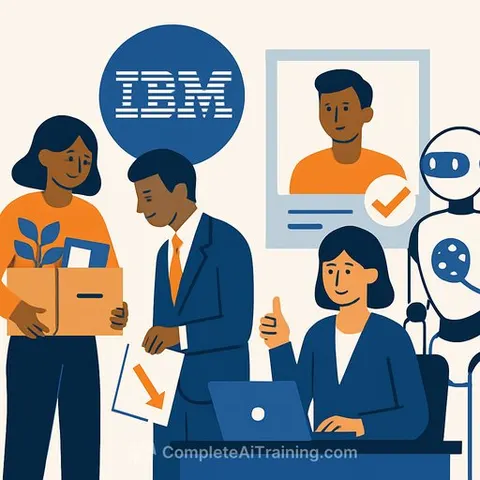
After Cutting 8,000 Jobs for AI, IBM Found Itself Hiring Thousands Back for the Same Reason
In 2023, IBM laid off nearly 8,000 employees, mainly in human resources, to make way for artificial intelligence. What seemed like a straightforward effort to automate repetitive tasks quickly took an unexpected turn: the company ended up hiring about as many people as it let go. This shift challenges common ideas about automation and its impact on jobs.
How AI Reshaped IBM’s Workforce and Productivity
At the start of 2023, IBM focused on automating repetitive HR tasks. They launched AskHR, an AI assistant handling vacation requests, payroll, and documentation. The goal was to automate roughly 30% of HR duties, improving productivity and reducing costs.
The results were striking. IBM reported that AI managed 94% of routine HR tasks, generating a $3.5 billion productivity gain across more than 70 business units. Yet, instead of shrinking their workforce permanently, IBM’s total employment increased after the layoffs.
CEO Arvind Krishna explained to the Wall Street Journal, “While we’ve done a tremendous amount of work to leverage AI, our total employment has actually increased because it’s allowed us to invest more in other areas.” Automation freed resources that IBM redirected toward hiring for roles requiring creativity, critical thinking, and human interaction—such as software engineers, sales representatives, and marketing experts.
Why AI Isn’t Just Killing Jobs but Creating New Careers
IBM’s experience highlights a key trend: AI is changing jobs rather than just eliminating them. Routine roles, especially in support services, are declining. At the same time, new roles emerge for workers who can build, manage, and sell AI solutions.
This shift presents challenges. Companies like Duolingo and several customer service platforms also tried AI chatbots to cut staff but soon realized the limits of automation. They had to hire specialists again to handle more complex tasks.
IBM’s AskHR handled over 11.5 million interactions in 2024, improving customer satisfaction scores drastically—from -35 to +74. Still, about 6% of inquiries needed human attention, proving that some skills remain irreplaceable.
What IBM’s AI Journey Teaches Us About the Future of Work
Looking forward, IBM’s story offers practical lessons for adapting to AI’s growing role. The World Economic Forum estimates that up to 92 million jobs worldwide could disappear by 2030 due to automation. However, new careers are emerging quickly—especially in high-skill areas related to AI development and oversight.
The key takeaway is clear: companies must rethink employment strategies. Success depends on investing in continuous learning and balancing automation with human skills. Workers in HR and beyond should be ready to reskill or upskill to stay relevant.
One example from the field shows how replacing entire customer service teams with chatbots can backfire. While chatbots handle simple queries well, complex cases quickly lead to frustration. Companies often have to bring staff back to maintain quality and connection. IBM’s journey confirms that automation is a tool to free people from routine work—not a total replacement for human interaction.
For HR professionals interested in expanding AI knowledge and skills, resources like Complete AI Training's latest AI courses offer practical paths to stay ahead in this shifting environment.