AI in Power Distribution: Lower Bills, Smarter Grids, and a Clear Path for Government Teams
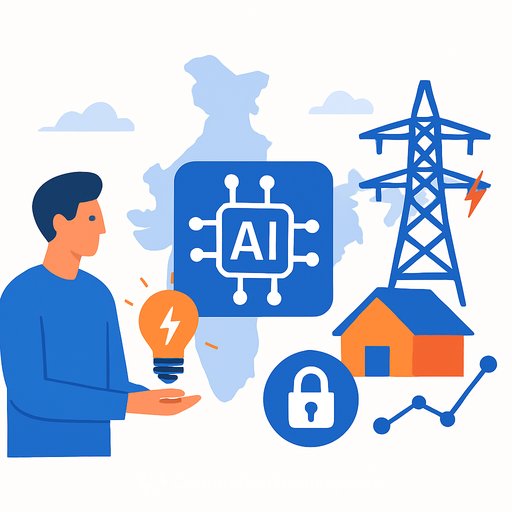
India is moving to bring down consumer electricity bills and improve utilisation across distribution networks with wider use of artificial intelligence. Shashank Misra, Joint Secretary at the Ministry of Power, said at a national conference in New Delhi that AI will help distributors pinpoint theft-prone zones, spot abnormal use, and respond faster. "The aim is to reduce the bill of consumers and better utilise the energy," he noted, pointing to daily usage analysis and earth leakage detection inside homes.
Misra added that the ministry is also exploring large language models, including GPT-based systems, to support decision-making, automate workflows, and improve real-time monitoring. "These technologies will allow us to act quicker and improve overall efficiency," he said.
Why this matters for government stakeholders
- Lower consumer bills through better detection of technical and commercial losses.
- Faster field action using AI-driven alerts and prioritised inspections.
- Improved financial health of discoms via targeted loss reduction and process automation.
- Data-informed governance with clear KPIs and transparent outcomes.
What AI will do across distribution networks
- Identify theft-prone zones and anomalous consumption patterns at feeder, transformer, and consumer levels.
- Flag earth leakages and household-level irregularities for faster resolution.
- Prioritise field inspections where they matter most, reducing time and cost.
- Automate back-office workflows and enable real-time monitoring for quicker decisions.
Policy context: Draft Electricity (Amendment) Bill, 2025
The draft bill released in October seeks cost-reflective tariffs to keep the sector financially viable, while protecting subsidised tariffs for farmers and low-income households. It shifts from a monopoly supply model to performance-based competition where public and private utilities compete on service quality. The goal: reliable, affordable, high-quality electricity for every consumer-households, farms, shops, and industry.
For updates and official notifications, see the Ministry of Power website: powermin.gov.in.
India's opportunity: surplus capacity and rising data-centre demand
Experts at the conference noted that India is well-placed to meet rising domestic demand and support a growing data-centre footprint. With electricity increasingly treated as a tradable commodity, India can demonstrate the ability to serve both internal and external needs through efficient markets and dependable delivery.
Action steps for the next 6-12 months
- Define clear outcomes: loss reduction targets, response-time SLAs, and theft-detection KPIs at feeder and subdivision levels.
- Establish data foundations: standardise data schemas, data quality checks, and secure access for AI analytics.
- Run focused pilots: start with theft detection and abnormal-use alerts in high-loss circles; measure impact before scale-up.
- Enable field execution: integrate AI alerts into crew dispatch tools; track closure times and recovery amounts.
- Strengthen oversight: publish periodic dashboards to improve transparency and accountability.
- Upskill teams: train operations and regulatory staff on AI workflows, LLM-assisted reporting, and basic prompt practices.
Governance and safeguards
- Protect consumer data: apply role-based access, anonymisation, and strict audit logs.
- Set model accountability: document data sources, thresholds, and escalation paths for AI-driven actions.
- Provide recourse: ensure quick grievance redressal for billing anomalies flagged by automated systems.
Where training helps
If you're building capacity for AI-assisted operations or reporting, practical courses can accelerate rollout. Explore role-based options here: Complete AI Training - courses by job.
The bottom line
AI gives discoms the tools to cut losses, act faster, and pass benefits to consumers. Combined with tariff rationalisation and fair competition under the draft bill, this approach can deliver better service, lower bills, and stronger sector finances-without adding complexity on the ground.
Your membership also unlocks: