
AI news ·
India ready to scale responsible AI across public education, report says
India has the infrastructure to scale AI in its public schools, according to a new report. The shift could add $2.6 trillion to GDP by 2047 and reach 350 million learners.
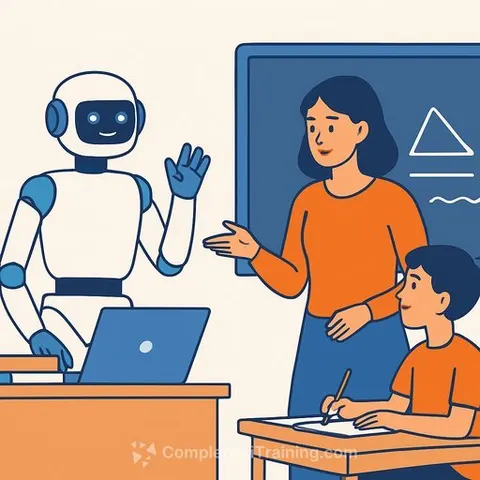
A new report from Wadhwani AI says India has the policy framework, digital infrastructure, and early deployment data needed to scale artificial intelligence across its public education system. The report, prepared in collaboration with The Bridgespan Group and supported by Google.org, argues that the conditions are in place to move AI in education beyond pilots and into system-wide use - a shift that could reach hundreds of millions of students.
The report, Harnessing AI in Education for Future Readiness: Bold Bets for Every Learner, maps a path for integrating responsible AI into government schools and learning systems. It estimates that AI-enabled education could add $2.6 trillion to India's GDP by 2047 and lift annual GDP growth by up to one percentage point.
Policy and infrastructure already in place
India's public education system serves more than 250 million students across 1.5 million schools, with nearly 60% in government and government-aided institutions. The report points to the National Education Policy (NEP) 2020 and digital public infrastructure like DIKSHA and the National Digital Education Architecture (NDEAR) as foundational layers. These platforms, it says, give the country a head start in moving from isolated pilots to sustained, system-level AI deployments.
Shekar Sivasubramanian, Head of Wadhwani AI, said, "Technology on its own will not change how education systems function. What will matter is how it is combined with strong systems, teachers, data, and safeguards to support learning in a sustained way."
Seven bold bets - and a ripple effect on learning
The report identifies seven priority areas it calls "bold bets" for long-term AI adoption: personalized learning, AI-powered teacher support, multilingual access, early childhood education, career navigation, skill development, and socio-emotional learning. If deployed through public systems, Wadhwani AI says these interventions could affect up to 350 million learners over time.
By linking education more directly to employment pathways, the report also frames AI as a tool for strengthening work readiness - not just improving test scores. The three broad pathways it describes are: improving access and equal opportunity, accelerating learning outcomes through adaptive models, and connecting education with career outcomes.
Real-world deployments show early results
Wadhwani AI's own Oral Reading Fluency (ORF) assessments have supported more than 27 million assessments across 8.5 million students. Adaptive learning platforms, the report notes, have shown 2-3x improvements in learning outcomes in controlled evaluations. Tools like Pratham's AI-enabled PadhAI platform for multilingual literacy and Antarang's AI-assisted career guidance systems are already being tested in the field. Wadhwani AI's Oral Reading Fluency and Spoken English Assessment & Practice (SEAP) tools are integrated into government systems for large-scale assessments and personalized feedback.
These early deployments suggest that AI can work at the last mile - if it is built into public delivery systems rather than bolted on as standalone products. The report stresses that the next phase depends on governments, philanthropies, civil society, and technology partners coordinating to embed tools into existing infrastructure.
Why this matters for education professionals
For teachers, school leaders, and education administrators, the report signals a shift from debating whether AI belongs in the classroom to deciding how to integrate it responsibly. The emphasis on AI for Education that works alongside teachers - not replacing them - aligns with tools already entering government systems. The "bold bets" around teacher support and personalized learning point to practical ways AI can reduce administrative load and offer data-driven insights without disrupting pedagogy. As public systems begin scaling these tools, professionals who understand both the promise and the guardrails will shape whether the technology delivers on its potential.