
AI news ·
India unveils AI in healthcare strategy at World Health Assembly, citing ethics and equity as core principles
India unveiled its national AI healthcare strategy, SAHI, at the World Health Assembly on May 21. The plan prioritizes ethical oversight and equal access across the country's 1.4 billion people.
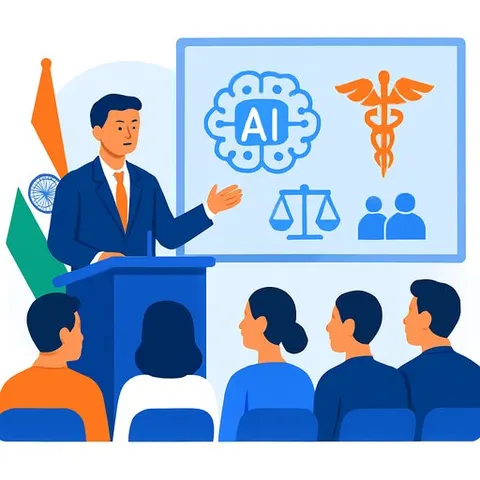
India launches AI healthcare strategy focused on ethics and equity
India's Health Minister Jagat Prakash Nadda unveiled a national strategy for artificial intelligence in healthcare during the World Health Assembly in Geneva on May 21, 2026. The Strategy for AI in Healthcare for India (SAHI) aims to guide the country's use of AI while prioritizing ethical oversight and equitable access across its 1.4 billion people.
Nadda said AI "must be shaped by sound regulation, rigorous research, ethical oversight, and a deep commitment to equity so its benefits reach every citizen." He stressed that technology alone cannot improve health outcomes-sector-specific governance frameworks are essential.
Building on existing digital infrastructure
India's approach builds on over a decade of digital health work. The government established a digital foundation through its Digital India initiative starting in 2015, followed by the National Health Policy of 2017, which called for an integrated and interoperable digital health ecosystem.
In 2021, India launched the Ayushman Bharat Digital Mission with consent-based frameworks for health data. SAHI, released in February 2026, represents the first comprehensive AI healthcare strategy from the Global South, Nadda said.
Addressing scale and diversity challenges
India faces distinct challenges in deploying AI across 22 official languages and vastly different healthcare access levels. Without careful design, AI could either close healthcare gaps or widen them, Nadda warned.
To manage this risk, India created BODH (Benchmarking Open Data Platform for Health AI), which tests AI solutions against real-world datasets to ensure they perform safely and fairly nationwide. This approach addresses a core concern: AI systems trained on limited data may fail when applied to India's diverse population.
A call for international collaboration
Nadda called for global cooperation on AI governance, saying no single country can address these challenges alone. He emphasized that India wants to build trusted, interoperable health data systems and advance ethical AI development through shared research.
He framed India's vision as "All-Inclusive Intelligence" rather than artificial intelligence-a distinction meant to signal that technology must serve public good, not just efficiency.
Learn more about AI for Healthcare and how AI Data Analysis supports equitable health outcomes.