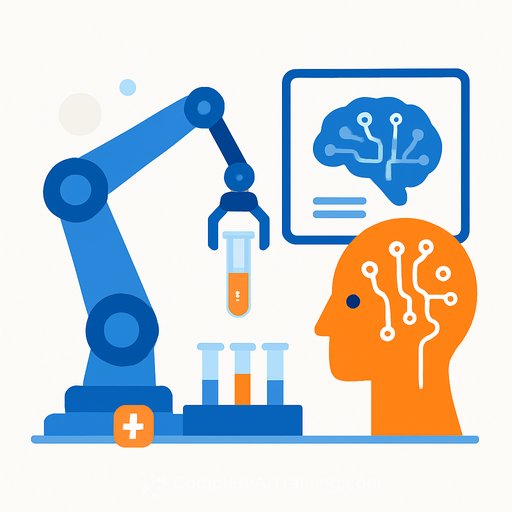
A new $6 million project at Indiana University will use artificial intelligence to screen billions of chemical compounds for potential Alzheimer's treatments. The five-year effort, funded by the National Institutes of Health, brings together researchers from the IU School of Medicine and the IU Luddy School of Informatics, Computing, and Engineering to find molecules that can interact with disease-relevant proteins and cross into the brain.
"Traditional drug discovery methods cannot efficiently search the enormous chemical space now available to researchers," said project leader Yijie Wang, an associate professor with the Luddy School. "Our goal is to develop AI-driven tools that can screen billions of compounds and prioritize those most likely to interact with disease-related targets and reach the brain."
Why Alzheimer's drug discovery lags
Alzheimer's disease presents a set of challenges that make target identification unusually difficult. Brent Clayton, PhD, associate research professor of medicine and the Medicinal Chemistry Core Leader in the TREAT-AD program, leads the chemistry side of the collaboration. He said the biological complexity of the disease means researchers cannot simply shut down a single process.
"Alzheimer's disease is complex, and there is still ongoing scientific debate about which disease mechanisms are most important at different stages," Clayton said. "That makes selecting the right cellular targets especially difficult. In many areas of medicine, you can focus on simply killing harmful cells or completely halting a specific process, but in neurodegenerative disease the goal is often to restore the delicate biological balance without pushing a pathway too far in either direction."
Even when a promising target emerges, designing drug molecules that reach the brain in adequate concentrations remains a steep hurdle. No approved treatment yet stops the underlying disease, though some drugs can ease symptoms.
AI's role in screening billions of compounds
The project runs alongside the IU School of Medicine-led TREAT-AD program, which also searches for new Alzheimer's drug targets. By applying machine learning to early-stage screening, the team aims to replace countless hours of manual research with rapid, automated prioritization of the most viable chemical structures. This approach allows researchers to explore a chemical space far larger than what conventional methods can handle.
For scientists working at the intersection of computation and biology, this kind of work reflects a broader shift in AI for Science & Research. Rather than replacing domain expertise, the tools act as a force multiplier-surfacing candidates that medicinal chemists can then evaluate and refine.
"Despite these obstacles, this work has huge potential rewards," Clayton said. "Alzheimer's affects millions of patients, families and caregivers. It's exciting to be part of a team at a top research university committed to taking on that challenge."
Why this matters for science and research professionals
The project illustrates a concrete model for integrating AI into drug discovery workflows. For research scientists, the ability to work with tools that process billions of data points and return ranked, testable hypotheses changes the pace of early-stage research. Skills in computational screening, target prioritization, and cheminformatics are becoming essential complements to traditional laboratory methods. Professionals looking to build those competencies can follow an AI Learning Path for Research Scientists that covers the same types of machine learning applications now being deployed against Alzheimer's targets.
Your membership also unlocks: