
AI news ·
Inside Columbia's AI Forum: Debates, Demos, and New Ideas for Teaching and Learning
Columbia's AI forum got practical on teaching, assessment, and student support: AI literacy, clear policies, and assessments that show thinking. Next up: pilot and share.
Reimagining Teaching and Learning in the Age of AI: Inside Columbia's Forum
March 6, 2026
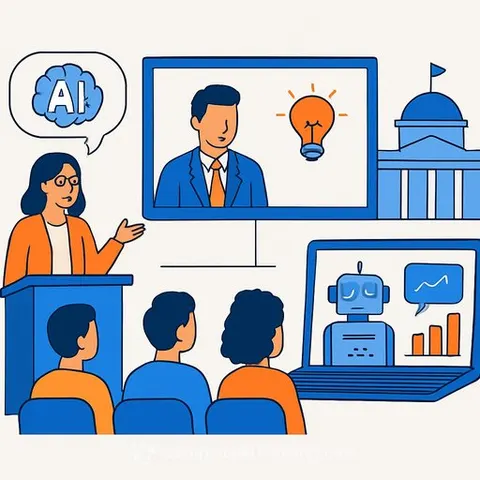
Columbia University hosted a full-day forum in Low Library focused on a clear question: How should educators teach, assess, and support students in an AI-first classroom? The event pulled together deans, faculty, and students for panels, a keynote, an Oxford-style debate, and a hands-on demo expo.
The goal wasn't hype. It was practical alignment-what to teach, how to teach it, and how to keep learning meaningful as AI becomes part of everyday academic work.
Why this mattered for educators
Columbia University Provost Angela V. Olinto set the tone: AI now runs across disciplines-from music and the arts to the sciences-and curricula must respond. The message was simple: treat AI as a core literacy and redesign courses and assessments to match.
Key moments from the day
- Deans' panel: Katrina Armstrong (Irving Medical Center), Shih-Fu Chang (Engineering), Jelani Cobb (Journalism), Amy Hungerford (Faculty of Arts & Sciences), and Costis Maglaras (Business School) shared how their schools are updating pedagogy and curriculum. Garud Iyengar, Avanessians Director of the Data Science Institute, moderated.
- Keynote: "Teaching With AI" by C. Edward Watson, vice president for digital innovation at the AAC&U, focused on responsible adoption, assessment integrity, and practical classroom use.
- Demo Expo: Faculty showcased live projects that use AI to deepen learning, rethink assessment, and improve student experience. Presentations included work by Christopher V.H.-H. Chen (Chemical Engineering) and initiatives spanning multiple departments.
- Provost's Teaching and Learning Grants panel: Faculty shared what worked, what didn't, and how their AI approaches are evolving across courses and campuses.
- Skills and mindsets panel: Critical thinking, creativity, collaboration, and AI literacy were highlighted as non-negotiable for an AI-driven workplace.
- Learner perspective: Students offered candid views on where AI helps, where it confuses, and what support they expect from instructors.
- Oxford-style debate: "In the Age of AI, Will Universities Become Obsolete?" Students and faculty debated the future of higher education. Matthew Connelly, professor of history and vice dean for AI Initiatives, moderated.
Practical takeaways you can apply now
- Define your AI policy per course. Clarify what's allowed, what isn't, and why. Give examples for assignments, collaboration, and citations.
- Redesign assessments. Favor open-ended prompts, oral defenses, process journals, and project artifacts that show thinking, not just final answers.
- Teach AI literacy explicitly. Cover strengths, limits, bias, and error patterns. Require students to document AI use and critically evaluate outputs.
- Use AI to scale feedback. Draft rubrics, formative comments, and practice quizzes with AI support-then review and personalize before sharing.
- Integrate authentic tasks. Cross-disciplinary projects, data-driven labs, and media analysis mirror the modern workplace and make AI use transparent.
- Protect academic integrity. Align detection strategies with pedagogy: process checkpoints, oral check-ins, and iterative drafts beat punitive policing.
- Invest in faculty development. Run internal workshops and share templates for AI-augmented lesson planning, grading workflows, and case studies.
- Build feedback loops. Ask students where AI helps or hinders learning, then adjust policies and assignment design in response.
- Teach ethics and data privacy. Discuss consent, confidentiality, model limitations, and responsible use in professional contexts.
Resources for educators
- AI Learning Path for Teachers - practical steps, tools, and lesson design ideas for immediate classroom use.
- AI for Education - articles and examples on curriculum integration, assessment, and faculty training.
What's next
Organizers plan to share recaps and videos from the forum. The bigger task is ongoing: keep testing AI in real courses, measure learning outcomes, and iterate.
If you lead a program or a course, start small, document everything, and build a repeatable model your colleagues can use. That's how schools move from ideas to durable practice.