
AI news ·
Insurers require human oversight for AI use in film production
Insurers refuse automatic errors and omissions coverage for AI film content without human review. Underwriters demand strict copyright checks to prevent infringement.
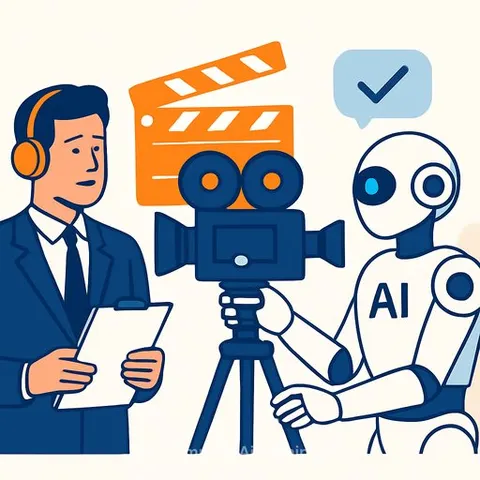
AI has not created a new category of risk in film and television production-just new routes to old ones like copyright and libel infringement-and underwriters are responding with more questions and a non-negotiable demand for human oversight before they will cover AI use, says Nellie Lindner, national practice leader for films and entertainment at BFL Canada.
The exposure sits under errors and omissions cover, she said, but the uncertainty around ownership and liability when producers use generative tools for scripts, images, or music has led to a consistent approach: coverage is not automatic, and every use is interrogated. Canada has only a small pool of underwriters writing production E&O coverage, and their approach reflects wider AI for Insurance practices-coverage is never simply included, and every application triggers a detailed set of questions.
The old risk in a new wrapper
"It was a human versus, or a writer versus, now it's a computer or AI technology," Lindner said. The core exposure remains the same: content sourced from elsewhere that may already belong to someone else. What has changed is how that content gets created and how hard it is to trace ownership when a generative tool is involved.
Underwriting scrutiny and the human requirement
When an E&O application comes in and a client asks whether AI is covered, underwriters immediately ask how the tool is being used and what controls are in place. "They will not automatically provide AI coverage," Lindner said. The non-negotiable is a person standing between the tool and the finished work-someone reviewing AI output to confirm it does not infringe on material owned by a third party. "They always want to make sure that there's a human element as well, so that there is the checks and balances," she said.
Traceable images and the governance gap
Lindner shared a case that showed how fast a submission can fall apart without that diligence. A client sent sample images they wanted to use, and both the underwriter and Lindner checked them. "Absolutely not," she said. The reason was immediate: the images were traceable. "Copy and paste them into the reverse image search and they came up."
That scrutiny extends across all elements of a production-music, scripts, titles-a domain where AI for Creatives guidance is increasingly relevant. A song generated through an AI prompt can surface lyrics that are already owned. The same logic applies to titles, with underwriters requiring clear evidence of ownership and proper clearance at every stage.
What underwriters are looking for is not additional premium but evidence of control. A client who can show how the tool is used, on what platform, under what employee guidelines, and how that use is monitored will generally get coverage. But guidelines alone are not enough. "Guidelines are one thing, but you also have to make sure that there is governance in place," Lindner said, and that governance must keep pace as the technology evolves. She noted that underwriters are now "doing a lot more underwriting as opposed to wanting to add on additional premiums," and if the controls meet expectations, coverage is not automatically declined.
The unproven exposure and the disclosure blind spot
The deeper reason for caution is that the exposure is still unproven. No large AI claim has landed yet, so insurers cannot price the risk with confidence. A bigger concern, Lindner said, is that some clients are not disclosing their AI use at all, which leaves insurers exposed to something they never priced. For now, AI sits where other emerging perils once sat-a moving target that underwriters may one day fold in automatically, but not yet.
Why this matters for insurance professionals
Lindner's account shows that AI risk in media production is being managed through granular underwriting and governance requirements, not blanket exclusions or premium hikes. The takeaway for underwriters and brokers is clear: AI use demands detailed questioning and verifiable human review. Governance frameworks that don't evolve alongside the technology leave a gap, and undisclosed AI use remains a blind spot that could produce claims no one priced. The core exposure-using content that belongs to someone else-is old, but the verification process is now a critical part of the underwriting workflow. "At its core, the exposure is the use of content sourced from elsewhere that may belong to someone else," Lindner said. "It comes down to making sure that you're verifying that ownership. And if it does belong to someone else, that doesn't mean you can't use it. You just have to get permission to do so."