
AI news ·
Insurers risk accelerating inefficiencies when AI is layered onto outdated workflows
Many insurers are applying AI to broken workflows, making inefficient processes faster rather than fixing them. The real gains come from redesigning underwriting and claims end to end before adding AI on top.
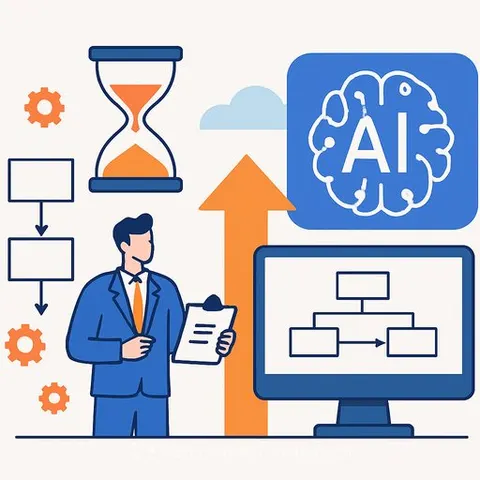
Insurers Are Speeding Up the Wrong Processes
Many carriers are applying AI to existing underwriting and claims workflows without redesigning those workflows first. The result: they accelerate inefficiencies instead of fixing them.
Insurers often start by improving efficiency within current systems before undertaking broader operating model changes. That's understandable. Insurance environments are deeply interconnected, highly regulated, and built on operational models that evolved over decades.
But layering AI onto fragmented processes creates only incremental gains. The real opportunity lies in rethinking how underwriting, intake, triage, and servicing work together end to end.
Speed Without Better Decisions
When AI integrates into outdated models, it can improve speed without improving decision quality or operational effectiveness, according to Manuel Rodriguez Vera, business unit head of insurance at WNS, part of Capgemini.
If workflows remain fragmented, overly manual, or dependent on disconnected data, AI simply makes bad processes faster.
Existing quality assurance controls and audit processes may not translate to an AI-centric model either. They often fail to identify potential red flags before they become problems.
The Investment-to-Outcome Gap
Many organizations invest heavily in AI models and pilots without equally rethinking workflows, decision-making processes, or data integration.
Organizations seeing stronger outcomes are typically the ones integrating AI into end-to-end underwriting workflows. They combine AI-led triage, workflow orchestration, and human underwriting oversight to reduce manual touchpoints and improve responsiveness.
Jaime Henry, vice president of product at Origami Risk, recommends starting simple. "It doesn't have to be a big 'wow' workflow to have impact. The 'wow' moments come through cumulative efficiencies and outcomes."
Where AI Changes the Game
Current workflows were often designed around the limitations of how machines and humans could interact. Many of those limitations no longer exist.
In an AI-native process design, information can be leveraged in real-time across multiple specialized agents. Parallel processing through properly orchestrated AI agents can scale without the same constraints that exist in human-centric designs.
This matters to advisors and customers. Fragmented operations slow underwriting responsiveness, limit personalization, and create inconsistencies in client interactions. Insurers that modernize workflows more comprehensively deliver faster decisions, improved service experiences, and more contextual product recommendations while keeping human judgment central.
Advisors should recognize that AI is shaping customer expectations around speed, transparency, and responsiveness-not just operational efficiency.
What Advisors Should Do Now
Agentic AI-systems that can independently reason, learn from outcomes, and adapt in real-time-is moving the insurance industry forward rapidly.
To stay ahead and position themselves in client conversations, advisors must adapt their approach. Henry's advice: "Block out and prioritize time to innovate. Those who prioritize and accept that AI isn't going away will learn more quickly and help lead future innovations."
Learn more about AI for Insurance and AI Agents & Automation to understand how these technologies reshape underwriting and claims workflows.