
AI news ·
Insurers use AI to triage CAT claims and scale call centre capacity, Deloitte says
Insurers are using AI to sort catastrophe claims faster, routing simple losses like food spoilage for quick settlement while sending complex cases to experienced adjusters. Call times have dropped from 25 to 15 minutes in some operations.
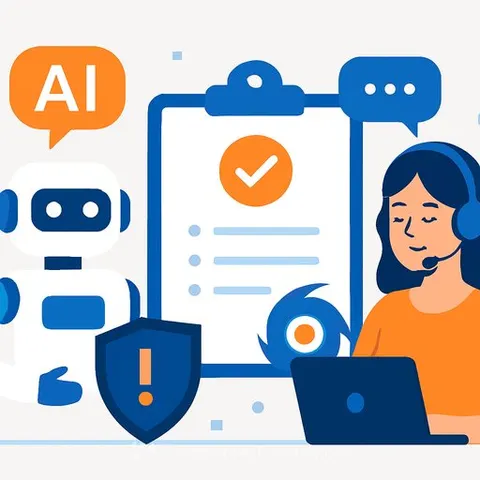
Insurers Deploy AI to Speed Up Catastrophe Claims Triage
Insurance carriers are using AI tools to sort incoming catastrophe claims faster, pushing urgent cases to adjusters while flagging routine losses that can be settled quickly. The shift addresses a longstanding bottleneck: adjusters historically set aside files and revisited them days later, delaying help to customers who needed it most.
Colin Asselstine, insurance claims leader at Deloitte Canada, said the question for most carriers is no longer whether to use AI, but where it adds measurable value. "In a CAT scenario, the first thing you need to do is triage your claims in a way that helps you organize them," he told Insurance Business. "How do I get the simple ones settled as quickly as possible, so my adjusters are dealing with individuals that have meaningful impacts?"
AI can scan incoming claims and identify cases like food spoilage or vehicle damage-straightforward, low-risk losses-and route them for fast settlement. That frees experienced adjusters to focus on complex, high-impact claims where customers face serious disruption.
Back-Office Support Tools Cut Call Times
Beyond triage, carriers are using AI to make adjusters and call-center staff more effective during surge events. Chris Duvinage, Deloitte Canada's national property and casualty insurance segment leader, said the gains are practical: "Listening to calls, transcribing calls, suggesting next-best action, and honestly just driving down the call time."
Call duration has dropped from 25 minutes to 15 minutes in some operations, a significant reduction given the volume during catastrophes. Transcription and AI prompts run in the background, flagging customers who haven't been followed up with, highlighting missing information, and keeping notes consistent across systems.
The shift changes how staff interact with customers. With guidance happening automatically, adjusters focus on conversation rather than rigid screen flows. "It's allowing you to be a lot more natural on the phone and deal empathetically with a customer, versus scripting the way your conversation goes based on the screen layout," Duvinage said.
Scaling the Workforce Without Months of Training
Catastrophe events force carriers to pull adjusters from other lines-auto staff answering property claims, for example. These employees often lack deep familiarity with property coverages and processes, creating a capacity bottleneck.
AI-driven guidance tools can query standard operating procedures, look up coverage details, and suggest the next question in real time. That lets auto adjusters support property calls without months of training. Asselstine said: "You can scale a lot faster with the right information, ask the right questions, and that's allowing you to cut down your hold times quite significantly."
Some carriers are already embedding this into their catastrophe playbooks, pre-training broader employee groups and activating AI co-pilots once a surge threshold is reached.
Customer-Facing AI Still Early
Fully autonomous, customer-facing AI in claims remains at an early stage. "Has anybody launched anything at scale yet to the customer? Customer-facing? No," Duvinage said. "It's still very much digital intake. It's not like an AI agent that talks to you."
He expects that to change. "You can imagine a world where these AI agents on the phone get so good you honestly can't really tell if it's a human or not," he said. In that scenario, policyholders would segment themselves: some always requesting a person, others happily skipping the line for a virtual agent that delivers fast, accurate answers.
Governance and Oversight Come First
Any move toward automated decision-making will draw regulatory scrutiny. Insurers are already designing internal controls to manage risk.
Asselstine said much of Deloitte's work with carriers now focuses on governance frameworks. "A lot of the work we're doing right now is advising on how to structure and put proper controls in place," he explained. "You want to be able to monitor your customer experience, monitor the risk and the payouts, and put in proper stop-gaps that make human intervention where you want comfort."
That means flags when a model is about to make a high-impact decision, rules forcing hand-offs to humans in specific scenarios, and continuous monitoring of outcomes. Asselstine said: "We're just at the beginning step of that journey. The question is how do you jump in, but in a way that ensures safety for customers and for the loss ratio companies are trying to protect as well."
Duvinage added that carriers cannot afford to move slowly. "Customers are getting that type of service from other sectors, in financial services, consumer and so on," he said.
Learn more about AI for Insurance and AI Agents & Automation.