Intel replaces front-line phone support with Copilot-powered "Ask Intel" - what support leaders need to know
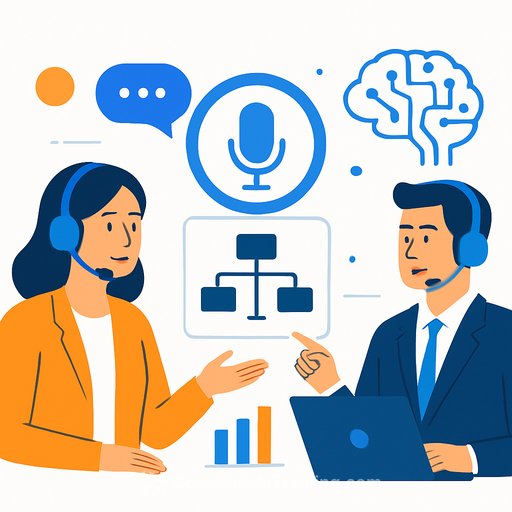
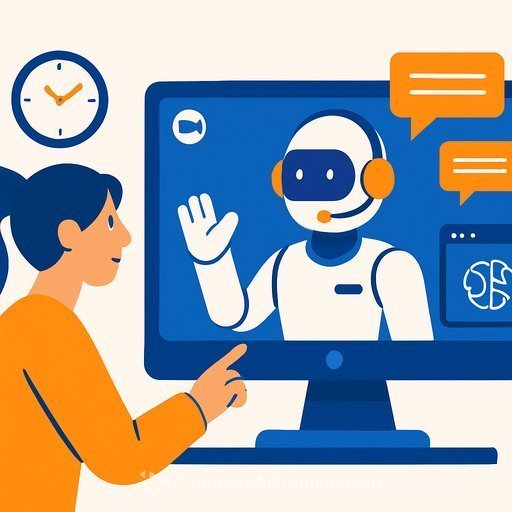
Intel has rolled out "Ask Intel," an AI assistant built on Microsoft's Copilot Studio, as the main entry point for support on its website. The move reduces public phone lines and trims certain social channels, pushing customers into web-based, automated workflows.
The system handles warranty checks, troubleshooting, and case creation before handing complex issues to human agents. It's one of the first large-scale AI-led front doors in the semiconductor space-useful context for any team planning a similar shift.
What changed
- Ask Intel becomes the primary support entry point across intel.com for warranty status, diagnostics, and ticketing.
- Public phone support is scaled back in most countries; some social media touchpoints are discontinued.
- Built on Microsoft Copilot Studio to connect internal data and workflows.
- Human agents still work cases, but after automated triage and case prep.
How Ask Intel works today
- Guides customers through basic diagnostics and next steps.
- Opens and updates service tickets and checks warranty coverage.
- Escalates to human agents when the issue exceeds predefined flows.
- Planned updates: deeper intel.com integration, driver identification, and auto-generated warranty claims.
Risks, limits, and policy flags
- Intel's documentation says responses aren't guaranteed accurate; features may be incomplete.
- Chat logs can be retained and processed by Intel and third parties; there's currently no opt-out.
- Autonomy is limited to predefined workflows-good for control, but gaps will show on edge cases.
- Consolidating into AI funnels can create single points of failure and blind spots if monitoring is weak.
Performance signals
Intel reports improved satisfaction and resolution rates versus prior quarters, and says early partner feedback is positive. No specific figures were shared, so treat it as directional, not definitive.
What this means for support leaders
- Expect more vendors to make AI the front door and scale back phones. Customers will land in chat first, then escalate.
- Agent roles shift downstream: less repetitive intake, more exception handling and complex troubleshooting.
- Ops focus moves to conversation design, prompt quality, data routing, and guardrails.
Action plan (next 90 days)
- 30 days: Map top contact drivers and build triage intents for the highest-volume 10-15. Define clear handoff rules to humans.
- 60 days: Add workflow automations (ticket creation, entitlement checks, RMA steps). Instrument every node with analytics.
- 90 days: Run A/B tests on prompts and flows. Tighten deflection thresholds, then re-check CSAT and FCR to avoid hidden churn.
Workflow design tips
- Start with "contain but don't trap." Offer fast human escalation when confidence is low or sentiment drops.
- Pre-fill tickets with conversation summaries and diagnostics to cut handle time for agents.
- Add guardrails: approved content sources, restricted actions, and rollback steps for risky operations.
- Keep a "known-bad intents" list and route them straight to experts.
Governance and privacy
- Be explicit: show data retention, third-party processing, and opt-out status in the chat UI.
- Log every AI decision with reason codes for audit and continuous improvement.
- Create an escalation path for content errors, policy complaints, and legal holds.
KPIs to watch
- Containment rate vs. CSAT delta (containment without frustration).
- First contact resolution, average handle time after handoff, and recontact rate within 7 days.
- Deflection accuracy: % of escalations that were necessary vs. avoidable.
- Safety: hallucination rate, policy violations, and data leakage incidents.
Team and skills
- Upskill senior agents as conversation designers and QA reviewers.
- Stand up a small "intent ops" squad to manage prompts, workflows, and metrics in weekly sprints.
- Reward agents for high-quality case notes; those notes train better triage.
Useful resources
Bottom line
Intel's move sets a clear signal: AI will handle intake by default, and humans will specialize in the hard stuff. If you run support, build the routing, guardrails, and coaching now-before your volume forces the change on its terms.
Via Tom's Hardware
Your membership also unlocks: