
AI news ·
Intersys report highlights AI governance gap between MGA and Lloyd's markets
Over 80% of managing general agents use AI, but only 52% have formal governance. This gap risks capacity contracts as regulators oversee the £47 billion market.
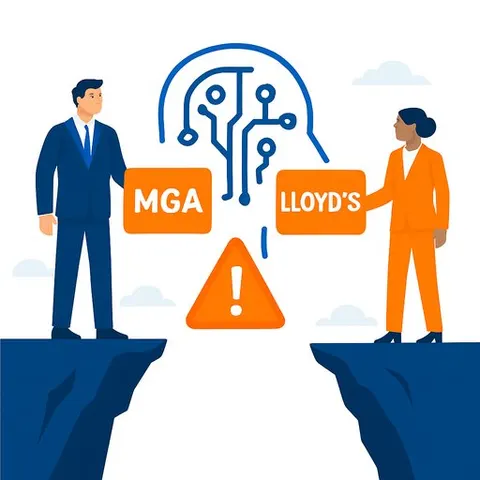
More than 80% of managing general agents are already using artificial intelligence, but only 52% have a formal governance framework in place, according to a white paper from Intersys published at the MGAA Annual Conference. The 41-percentage-point gap between MGAs and the 93% governance rate among Lloyd's managing agents carries direct commercial consequences for coverholder relationships and delegated authority reviews.
The adoption-governance mismatch
Intersys's white paper, "The Perils and the Potential of AI in the MGA Market: Your Guide to Compliance-Ready Artificial Intelligence," argues that AI adoption has outpaced governance at both organisational and market levels. Generative AI tools reached mainstream use within weeks, leaving many firms without the policies and controls to manage them effectively.
Without appropriate frameworks, MGAs face specific risks: AI hallucinations feeding into underwriting decisions, data poisoning, intellectual property loss, AI-enabled cyber attacks, regulatory failures, and heightened accountability for senior managers. Because MGAs operate under delegated authority, handling sensitive data on behalf of insurers, poor AI governance affects regulatory compliance, capacity partner confidence and reputation-not just internal operations.
A sector under regulatory watch
The white paper lands as the Financial Conduct Authority sharpens its focus on delegated authority arrangements. More than 300 UK MGAs now underwrite over 10% of the country's £47 billion general insurance premiums, and the regulator has signalled closer oversight of claims handling, transparency and accountability in the capacity chain.
On AI specifically, the FCA has said it will rely on existing frameworks such as the Consumer Duty and the Senior Managers and Certification Regime rather than introducing new AI-specific rules. Its first Insurance Regulatory Priorities Report, published in February, named AI adoption a formal area of focus for 2026. A House of Commons Treasury Committee inquiry earlier this year found that oversight had not kept pace with AI use across financial services and recommended the FCA publish practical guidance on AI accountability by year end.
The Lloyd's governance benchmark
The Lloyd's Market Association's April AI Adoption Toolkit, based on a survey covering over 60% of Lloyd's stamp capacity, found that 93% of managing agents had a formal AI governance framework in place or in development. Data privacy, cybersecurity and third-party risk were their top concerns. That figure now sets a de facto benchmark for the delegated authority market. The gap between managing agents and MGAs means many coverholders writing on Lloyd's paper fall short of the standards expected by the managing agents above them, creating a third-party AI risk that those managing agents must address under their own frameworks.
Why this matters for insurance professionals
For MGAs, closing the governance gap is not a box-ticking exercise. Managing agents with governance frameworks in place will increasingly scrutinise the AI practices of the coverholders they do business with. A weak governance posture could affect delegated authority relationships and renewal decisions. As regulatory attention intensifies, investing in practical AI governance now can protect commercial arrangements and demonstrate readiness for FCA expectations. Understanding the intersection of AI for Insurance and regulatory compliance is becoming a core operational requirement.