Intuit's AI Agents Hit 85% Repeat Usage. Here's What That Means for Support Teams
Intuit disclosed that 85 percent of customers who tried its AI agents used them at least twice, a retention rate that exceeds early chatbot benchmarks. The company serves 3 million customers across tax, accounting, and marketing workflows. In January alone, its accounting agent categorized 237 million transactions.
The metric matters because repeat usage suggests customers trust the automation enough to return. Unlike one-off curiosity clicks, a second interaction indicates the agent solved a real problem.
How Intuit Defines Repeat Engagement
Repeat engagement simply means a customer used an agent feature twice or more. The company disclosed this definition in investor materials and stressed the metric spans all available agents.
The bar is intentionally modest. Customers rarely retry automation that fails them, so crossing two uses signals retained confidence rather than accidental clicks. Intuit declined to share week-over-week retention curves, leaving analysts asking for deeper disclosure on how many users stick around beyond the second attempt.
The AI-Plus-Human Design That Drives Retention
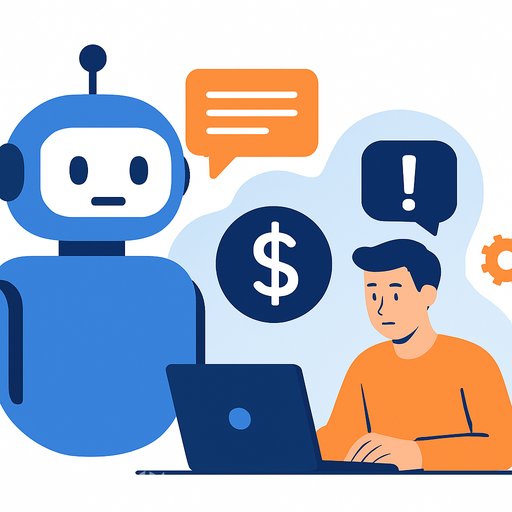
Intuit pairs autonomous agents with human experts in a model called AI+HI. Agents handle routine multi-step work. When confidence drops, the system escalates to a specialist who verifies the output before the customer sees it.
This handoff prevents hallucinations, compliance failures, and customer frustration. Customers get speed from automation and reassurance from human judgment when stakes matter.
The payoff shows in concrete outcomes. The tax agent surfaced an average $1,000 in extra deductions per user. The accounting agent saved hours of manual transaction sorting. Customers perceive measurable value and return for more.
Compliance Built Into the Workflow
Financial data requires strict controls. Intuit encrypts records at rest and prohibits model training on production data. Third-party language models run in secure containers or receive tokenized prompts that strip identifying details.
The human-off escalation path doubles as an audit mechanism. Experts verify uncertain outputs before filings, preserving statutory compliance. The company also publishes transparency reports detailing false-positive rates for each agent and logs every user action for forensic traceability if disputes arise.
Turning Engagement Into Revenue
Repeat usage alone doesn't generate profit. Intuit ties agent adoption to upsells: QuickBooks Live subscriptions, payroll processing, and payment services. QuickBooks Live subscriptions grew over 50 percent in the most recent quarter, a surge the company attributed to AI adoption.
The firm also plans to license its GenOS platform to partners building vertical agents. A partnership with Anthropic allows compliant model customization for different industries. Potential revenue levers include tiered usage quotas bundled with payroll, premium tax advisory layered on top of agent outputs, and lending offers triggered by bookkeeping insights.
The Partner Ecosystem
Anthropic's Claude Agent Builder leads Intuit's roster. The company also lists applications in OpenAI's marketplace for marketing automation and invoicing. Banks and fintechs integrate QuickBooks data via APIs, extending agent insights into lending workflows.
Each partnership raises security and liability questions. Partners must follow Intuit's governance policies and respect usage limits. Violations trigger throttling or termination to protect customer data.
Metrics That Matter Going Forward
Repeat engagement makes the headline, but deeper cohorts tell the real story. Analysts want daily, weekly, and monthly active user ratios segmented by product tier. They're watching human intervention rates, which signal whether margins can expand as models improve.
Average revenue per engaged customer will reveal monetization efficiency. Usage-based overages from premium workflows could become a critical signal. Investors also expect disclosure of customer acquisition costs tied to AI campaigns.
Key questions for upcoming quarters: What percentage of repeat users upgrade to paid expert support? How does human-off verification time trend as models improve? Will partner-led usage outpace in-house channel growth?
What Support Teams Should Watch
Intuit's 85 percent metric demonstrates what disciplined AI design and data stewardship can achieve. The AI+HI architecture shows that automation need not sacrifice trust. Revenue conversion, compliance oversight, and partner coordination will decide long-term success.
Support professionals evaluating similar deployments should benchmark retention metrics, study escalation pathways, and measure monetization levers. Focus on the metrics that matter: repeat engagement, human intervention rates, and revenue per engaged customer. Measure rigorously and iterate quickly based on what you learn.
For a deeper understanding of deploying secure, compliant AI in customer support, explore AI for Customer Support and Generative AI and LLM resources that cover agent architecture, governance, and retention strategies.
Your membership also unlocks: