IPRA Urges UN to Tackle AI and Social Media Misinformation Threats
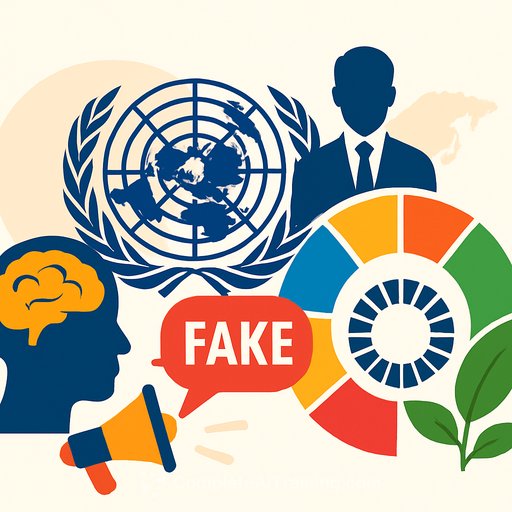
The International Public Relations Association (IPRA) has taken a firm stance on the growing challenges posed by misinformation and unregulated artificial intelligence. Ahead of the 2025 High-Level Political Forum (HLPF), IPRA submitted a formal statement to the United Nations Economic and Social Council (ECOSOC), highlighting the vital role of trusted communication in meeting the Sustainable Development Goals (SDGs).
Approved by the IPRA Board, the statement has been officially included in the UN’s formal records for the event. IPRA Secretary General Philip Sheppard noted that this acceptance represents significant recognition of the association’s commitment to global advocacy on communication issues.
Communication Under Threat
IPRA’s submission warns that misinformation and AI-driven content manipulation risk derailing progress toward the SDGs. The statement emphasizes that “trusted communication channels” are essential for mobilizing stakeholders to act and invest in sustainable development.
Quoting naturalist David Attenborough’s 2020 insight that “saving the planet is now a communications issue,” IPRA stresses that while tools exist to advance the SDGs, their effectiveness depends on credible communication. The association warns that the spread of fake news and unregulated AI undermines this foundation.
How Misinformation Spreads
IPRA explains that fake news thrives on social media because it is both free and lacks accountability. This environment allows anonymous users and bots to flood platforms with false information, overwhelming trustworthy content.
Artificial intelligence further complicates the problem by amplifying misinformation, often trained on biased or contaminated internet data, which multiplies the volume and reach of misleading narratives.
IPRA’s Proposed Solutions
To counter these challenges, IPRA recommends two key approaches:
- Trusted Social Media: Implement a nominal annual fee—such as $1 per account—to cut down on fake and bot-generated profiles by enforcing traceability and accountability.
- Trusted Artificial Intelligence: Adopt the 2021 UNESCO Recommendation on the Ethics of Artificial Intelligence, which includes principles like respect for human rights, fostering inclusivity, ensuring diversity, and protecting the environment.
Calls to Action for Governments and Communicators
- Upskill: Invest in ongoing education and ethical training to keep pace with AI developments.
- Regulate: Establish legal frameworks that guarantee human oversight of AI-generated public communication.
IPRA’s statement concludes with a strong warning: “The UN will fail to achieve the Sustainable Development Goals unless member states restore trust in communication with laws mandating paid-for social media and regulation of Artificial Intelligence.”
Looking Ahead to the 2025 HLPF
The 2025 High-Level Political Forum will focus on “Advancing sustainable, inclusive, science- and evidence-based solutions for the 2030 Agenda for Sustainable Development.” It serves as the main UN platform to review SDG progress and guide political commitments.
Jim McQueeny, IPRA’s Permanent Representative to the UN, commented on the inclusion of their submission: “This inclusion is not an insignificant accomplishment. It showcases the credibility of IPRA at the UN and our continued work to promote the SDGs.”
The full statement and other accepted submissions are publicly accessible on the United Nations Economic and Social Council website.
Your membership also unlocks: