
AI news ·
Israeli investors pour billions into data centers as AI drives demand for server infrastructure
Israeli developers, energy firms and celebrity investors are pouring billions into data centers as AI demand drives a construction boom. Mega Or's stock is up 400%, while the government has fast-tracked approvals for large facilities.
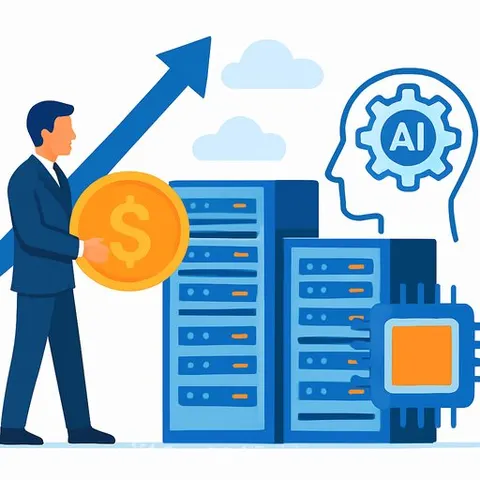
Israeli real estate firms bet billions on data centers as AI demand reshapes infrastructure investment
Israeli developers, energy companies and celebrity investors are pouring billions into data center construction as artificial intelligence workloads create unprecedented demand for server farm capacity. The shift has transformed data centers from utility infrastructure into a primary investment vehicle, with returns that rival or exceed traditional real estate.
This week, Kardan Israel announced a new subsidiary to consolidate its data center holdings across facilities in Kfar Saba and Shoham. The company, traditionally known for income-producing real estate, now sees server farms as a significant growth engine.
The momentum reflects a global surge. Microsoft, Google, Amazon Web Services and Oracle have announced tens of billions in hyperscale facility investments since the start of the year. These companies are competing fiercely for server capacity, cooling systems and electricity to power AI operations.
Who's entering the market
Ofer Yanai, controlling shareholder of Nofar Energy, this week purchased land in Shoham for 361 million shekels to build a new data center. He described the opportunity bluntly: "This is picking gold off the floor."
Yanai noted that a small 50-megawatt data center can be built and sold within three years while retaining roughly 850 million shekels in value. He compared the current environment to the renewable energy boom of 2021, calling today's economics "100 times stronger."
The Anan Group, which includes singer Omer Adam as a front-facing investor alongside real estate entrepreneur Maor Malul and businessman Nissim Sariel-Gaon, is building two facilities in Tzora and Afula with planned capacity near 200 megawatts. In April, Anan signed a long-term contract worth hundreds of millions of dollars with AI infrastructure company Crusoe Technologies to operate a supercomputer in Afula.
Eitan Yochananoff, controlling shareholder of the Yochananoff supermarket chain, bought land in Yavne for a data center campus this month. Rami Levy's group is examining construction on company-owned land in Kiryat Gat and Netanya.
Mega Or, led by Zahi Nahmias, remains the most active player. The company operates seven data centers with combined capacity exceeding 300 megawatts and plans three more with similar scale. Mega Or signed agreements with Nvidia to build a data center and supercomputer in Mevo Carmel, and with Nebius in Modi'in. Its stock has gained roughly 400% over the past year, reaching a market value near 24 billion shekels.
Dana Azrieli's Azrieli Group acquired Norwegian company Green Mountain and U.S. company Compass, launching international data center operations across Europe, North America and Israel. Data centers are now the group's primary growth engine.
Israel's market position
Israel currently operates dozens of data centers with combined capacity exceeding 400 megawatts, according to the Israel Data Center Association. Several dozen more are being planned or built, with additional facilities in licensing and planning stages totaling 2 gigawatts.
This expansion could bring Israel's total capacity to 1 terawatt within years-a tenfold increase from current levels. The country offers advantages that attract international investment: available land, relatively low electricity costs and existing data infrastructure.
The government designated data centers as "national infrastructure" in February 2026. A new bill proposes fast-track planning approval for AI-ready facilities with capacity exceeding 50 megawatts, with a stated goal of building 10 such facilities annually.
NED, founded in 2020 by Daniel Efrati, Shelly Landsmann and David Bloom, operates differently from real estate-focused competitors. The company brings expertise in building and operating data centers while partnering with others on the real estate side. It is constructing a 50-megawatt underground campus in Netanya with the Levinstein Group at an investment of 1.3 billion shekels, designed specifically for AI workloads and high-performance computing.
The operational and environmental challenges
The data center boom masks significant technical and operational obstacles. Power consumption is the central constraint. AI workloads require substantially more electricity per server rack than traditional computing, and cooling systems themselves demand enormous power. A single AI campus can consume enough electricity to power a small city.
Operating a data center differs fundamentally from building one. Landsmann said real estate developers often underestimate the complexity of assembling electromechanical systems, meeting strict service contracts and paying penalties for downtime. "When you calculate all those expenses, some players may discover that the gold they thought they had is just a simple metal, aluminum," she said.
Environmental concerns have grown as data centers become among Israel's largest energy consumers. The Society for the Protection of Nature in Israel warned that the government decision could harm open spaces and burden the electricity grid, calling it "a dangerous gamble on Israel's energy security."
Security presents another layer of risk. Last March, Iranian drones struck an Amazon Web Services data center in the Gulf, disrupting services for several days. The Nimbus government tender did not require underground construction to reduce costs, relying instead on backup facilities at sister sites. Other Israeli companies have invested additional funds in building shelters dozens of meters underground.
The market appears unlikely to slow. Every available chip is being claimed quickly, and that situation is expected to continue for years. For real estate investors and developers, the calculus is straightforward: the infrastructure needed to run AI is scarce, and Israel offers a viable location to supply it.
AI for Real Estate & Construction resources can help professionals understand how artificial intelligence is reshaping infrastructure investment decisions.