Italy Blocks Meta's WhatsApp AI Ban: What Customer Support Leaders Need to Do Now
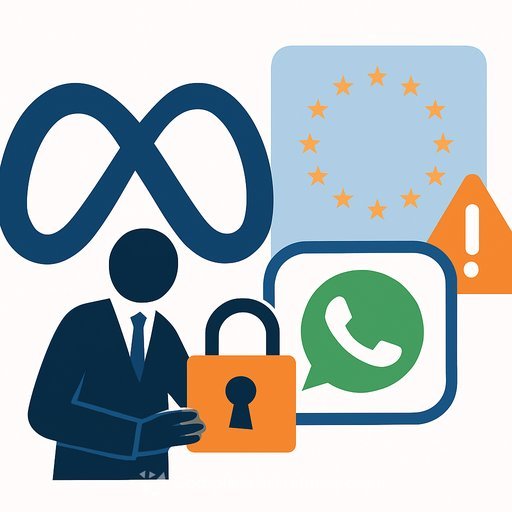
Italy's Competition Authority ordered Meta to immediately suspend its plan to block rival AI chatbots on WhatsApp. The policy would have kicked in January 2026 and limited who could deliver AI through WhatsApp's Business API.
European regulators are now watching closely. The European Commission has also opened a competition probe into whether Meta's approach would shut out third-party AI providers across the European Economic Area.
What changed (and why it matters to support teams)
- AGCM's December 24, 2025 order halts Meta's policy that would ban general-purpose AI chatbots from WhatsApp's Business API.
- Customer service bots stay allowed. The ban targeted standalone chatbots that compete with Meta's own AI, not support automations tied to a business account.
- Services likely affected if the ban returns: ChatGPT, Perplexity, Claude, and others distributing through WhatsApp.
- WhatsApp is a massive support channel. Losing it as an AI distribution path can alter response times, containment, and cost per contact.
Immediate impact for Customer Support
- Your existing WhatsApp support automations are safe for now.
- If your roadmap includes a general-purpose chatbot on WhatsApp, keep testing-but build a fallback plan.
- Expect policy shifts. Regulatory reviews can force changes with short notice.
90-day playbook
- Audit your flows: Confirm your bot qualifies as customer service (order status, returns, account help) vs. general-purpose chat.
- Vendor check: Ask providers for written confirmation of WhatsApp policy compliance and contingency plans.
- Data controls: Validate opt-in, data residency (EU if required), retention, and audit logs.
- Fallback channels: Prepare quick switches to web chat, SMS, or in-app messaging if access changes.
- Rate limits & failover: Set thresholds that gracefully hand off to agents if API access degrades.
- SLA alignment: Update internal SLAs for any supplier dependency tied to WhatsApp.
- A/B providers: Pilot at least two AI vendors to reduce single-point risk.
- Comms plan: Draft user messaging for service changes (status page, WhatsApp template, email).
- Legal review: Add termination and portability clauses to vendor contracts.
- Monitor regulators: Track AGCM and European Commission updates weekly.
KPIs to watch
- Median first response time (WhatsApp vs. other channels)
- Resolution time and containment rate (bot-only vs. bot+agent)
- Escalation rate to live agents
- Cost per contact and deflection percentage
- CSAT by channel and intent
Questions to ask your AI vendor this week
- Are our WhatsApp use cases classified as customer service under current policy?
- What's the fallback if WhatsApp access is restricted-how fast can we shift traffic?
- Do you support EU data residency, encryption in transit/at rest, and audit exports?
- What are your rate limit guardrails and failover to agent workflows?
- Can you provide a live compliance statement for WhatsApp Business API usage?
Scenarios to prepare for
- Ban reinstated: General-purpose chatbots get blocked again. You keep customer service bots, but standalone assistants lose reach.
- Open access: Regulators push for equal access. More vendor choice and faster iteration on WhatsApp.
- Hybrid rules: Narrowly defined use cases allowed; gray areas require approvals. Compliance becomes an ongoing task.
Why regulators stepped in
Authorities suspect Meta could use WhatsApp's scale to tilt the field toward its own AI by limiting rivals' distribution. With more than two billion users, WhatsApp is a critical channel. Control over that channel can decide which AI services users actually engage with.
The European Commission's probe runs in parallel with Italy's order, signaling broader scrutiny of platform policies that influence AI access across the region.
FAQ
- What policy did Italy suspend? Meta's plan to ban companies from using WhatsApp's Business API for general-purpose AI chatbots starting January 2026.
- Which AI chatbots were in scope? Providers like OpenAI (ChatGPT), Perplexity AI, and Anthropic's Claude distributing via WhatsApp.
- Does this hit all AI on WhatsApp? No. Customer service bots remain allowed.
- What is the EU Commission doing? Investigating whether Meta's policy restricts third-party AI providers across the EEA.
- What happens next? Meta must comply with the suspension while investigations continue. Outcomes could include fines and new access rules.
Useful sources
Level up your support AI stack
If you're planning, piloting, or rebuilding your AI support flows, explore hands-on training and tools mapped to Customer Support roles.
The headline: your current WhatsApp support automations can continue. The risk: policy changes can flip distribution overnight. Treat this as a prompt to harden your stack, diversify vendors, and keep your compliance playbook close.
Your membership also unlocks: