
AI news ·
Jamie Dimon says AI creates new jobs and urges companies to reskill workers
JPMorgan CEO Jamie Dimon urged companies to retrain staff for AI roles instead of fearing job cuts. He noted the bank created more new positions than it eliminated.
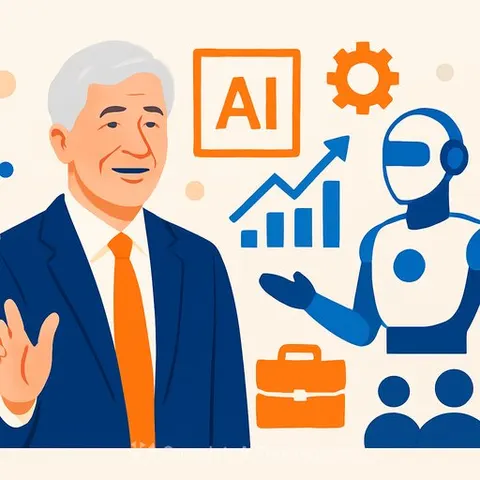
JPMorgan Chase CEO Jamie Dimon urged companies to focus on reskilling employees rather than fearing AI-driven job losses, speaking at the Pennsylvania Defense and Innovation Summit. His comments come as executives wrestle with whether the technology will eliminate middle-class roles before workers can adapt.
Dimon, appearing alongside Senator Dave McCormick, said that people should not be overly anxious about artificial intelligence. He pointed out that new technologies have historically created new jobs, and inside JPMorgan Chase, AI has already generated many new positions while reducing jobs in some areas only slightly.
AI already creating jobs at JPMorgan
The bank's experience with AI has produced more roles than it has eliminated so far, Dimon said. He declined to specify the number of new jobs but emphasized that "technology consistently leads to the creation of new roles," describing a pattern that held across past industrial and digital shifts.
Still, the pace of adoption creates a specific risk. If companies implement AI too quickly, middle-class jobs could vanish before workers have a chance to retrain. That gap, he argued, is the real threat.
The speed-of-adoption problem
Dimon said the key concern is "whether adoption happens too quickly, potentially eliminating middle-class jobs before workers can be retrained." His solution is straightforward: focus on work skills. By concentrating on the abilities people need for new roles, businesses can reduce the friction that often comes with automation.
At JPMorgan, that means redeploying employees through reskilling and retraining programs. The bank plans to move workers into freshly created AI-related positions instead of cutting headcount. The approach, Dimon argued, is more rational than alarming the public prematurely about AI's effects.
Reskilling over cost-cutting
Dimon framed a clear choice for business leaders: use AI to save money by doing less work, or use it to perform tasks faster and deliver better results. He said he prefers the latter, seeing the technology as a way to expand capability rather than simply shrink expenses.
For executive teams building similar internal mobility programs, resources like the AI Learning Path for CEOs offer structured guidance on aligning workforce strategy with AI adoption. The path helps leaders design retraining timelines that match the technology's rollout speed, a challenge Dimon highlighted.
Why this matters for executives and strategy
Dimon's remarks frame AI workforce fears as a transition problem, not a structural crisis. The technology will create jobs, but only if companies invest in reskilling before cuts. For executives, the lesson is to treat employee redeployment as a strategic line item-not an afterthought. Funding retraining now can avoid morale damage and regulatory friction later, while positioning the business to use AI for growth instead of just cost reduction.