Japan to launch AI-run bioscience lab for 24-hour research
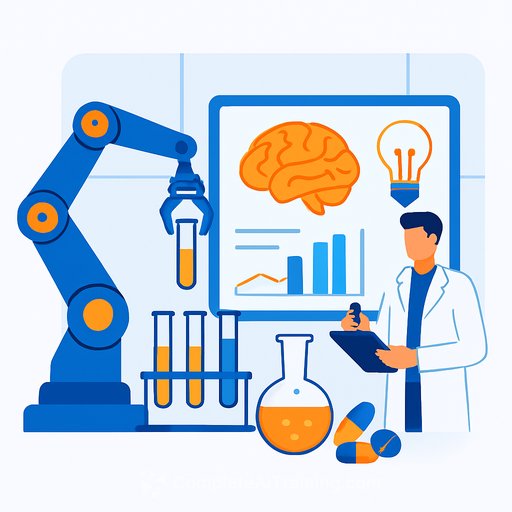
The Japanese government plans to build an automated laboratory operated by artificial intelligence and robots that will conduct bioscience research around the clock. The facility aims to accelerate drug development as Japan works to keep pace with research efforts in the US and China.
The lab will focus on three areas: genetics, proteins, and brain activity. By running experiments continuously without human operators, the facility could compress research timelines that typically span months or years into shorter periods.
Why this matters for researchers
Labs that operate 24/7 can generate more data points faster. An experiment that takes a human researcher eight hours to set up, run, and document could cycle multiple times in a single day under AI control. This efficiency gain compounds across hundreds of experiments.
The approach also reduces human error in routine tasks like sample preparation, measurement, and data logging - areas where consistency matters for reproducible results.
The competitive angle
Japan's government framed the project as a response to similar automation efforts in other countries. Both the US and China have invested in AI-assisted research infrastructure. Japan's initiative suggests the country views laboratory automation as essential to maintaining competitiveness in biomedical research.
Drug development remains one of the most time-intensive and costly research endeavors. Shaving months off the discovery phase could translate to significant advantages in bringing new treatments to market.
What comes next
The announcement did not include a timeline for the lab's opening or specify which institutions would operate it. Details about the AI systems and robotics platforms involved were not disclosed.
For researchers interested in how AI is reshaping laboratory work, AI for Science & Research courses cover automation in experimental design and data analysis.
Your membership also unlocks: