
AI news ·
Jeremy Renner backs RapidSOS push to use wearable and connected device data in emergency response
Wearables and connected vehicles now feed real-time location and vital signs to 911 dispatchers before paramedics arrive. RapidSOS founder Michael Martin explains how the system works and why it matters for emergency care.
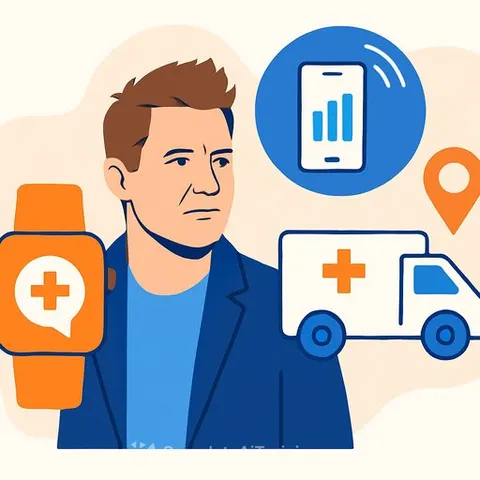
Real-Time Data From Wearables Could Speed Emergency Response
Data flowing from wearables, connected vehicles, and other sensors can help emergency responders reach patients faster and with better information. Michael Martin, founder and CEO of RapidSOS, explains how real-time data systems are changing 911 response.
The approach pulls information from devices people already carry-smartwatches, fitness trackers, connected cars-and makes it available to dispatchers and first responders in seconds. This means paramedics can know a patient's location, recent vital signs, or medical history before arriving at a scene.
For healthcare professionals managing emergency operations or telehealth systems, understanding how these data streams work matters. The technology sits at the intersection of AI for Healthcare and operational efficiency.
Why This Matters for Healthcare
Emergency departments already struggle with volume and timing. Faster, more accurate information about incoming patients lets staff prepare resources and treatment plans ahead of arrival.
Connected data also supports better triage decisions. Dispatchers can route patients to appropriate facilities rather than defaulting to the nearest hospital.
Upcoming Healthcare AI Events
HIMSS is hosting two events focused on AI in healthcare:
- AI Executive Leadership Summit - June 24, 2026 in Boston
- AI in Healthcare Forum - June 25-26, 2026
Both events cover clinical applications, workflow optimization, quality and safety, and telehealth. Register separately for each event on the HIMSS website.
For healthcare workers looking to understand how Generative AI and LLM technologies power real-time decision systems, these forums offer direct exposure to how emergency response and other clinical workflows are changing.