
AI news ·
Jewish educators launch shared AI platform to serve global Jewish learning communities
Jewish educators are building JEDAI, a nonprofit AI platform designed to keep commercial algorithms from shaping how students learn Jewish identity and heritage. Global pilots launch in January 2027, starting with Hebrew language instruction.
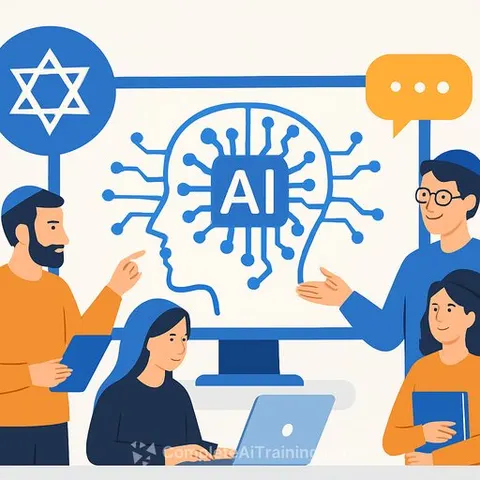
Jewish educators are building their own AI to prevent commercial algorithms from defining Jewish identity
Global Jewish education faces a structural crisis. Tuition costs are pricing families out of day schools, qualified Hebrew and Jewish studies teachers are scarce worldwide, and young Jews in peripheral communities have little access to structured learning. Meanwhile, they use commercial AI daily-meaning algorithms optimized for efficiency and profit are filling the gap where Jewish education should be.
A new initiative aims to change that. JEDAI (Jewish Education AI) is a nonprofit technological infrastructure designed specifically for Jewish schools, camps, and communities. Rather than importing generic commercial tools, JEDAI lets educators set pedagogical and ethical boundaries while maintaining full curriculum control.
Building on proven technology
JEDAI builds on I-Teach, a personalization engine developed by Israel's largest educational technology company. The platform already serves 140,000 students across 400 Israeli schools and helps students reach mastery in 60% less time.
The Israeli Innovation Authority backed the project with a $1 million grant, and Israel's Education Ministry recognized it. The Pincus Fund and Machon Siach are spearheading the effort, with early support from the American Society for Holocaust Education and Remembrance.
Why Jewish education needs different AI
Commercial AI measures success in test scores and screen time. Jewish education measures it differently: relationships, identity, belonging, and participation in historical continuity. Students are apprenticing into a people, a language, and a covenant-work that requires dialogue and human formation, not automated efficiency.
Without intervention, a two-tier future emerges. Wealthy institutions build proprietary tools while smaller, peripheral communities stay isolated. JEDAI prevents that fracture by offering shared infrastructure any organization can access at cost.
What comes next
Global pilots launch in January 2027 across North America, Latin America, Europe, and South Africa. The initial focus is Hebrew language fluency-the historic bridge of text, prayer, and peoplehood currently in global crisis.
As the platform matures, it will evolve beyond a classroom tool into a lifelong learning companion. It will handle routine differentiation so teachers focus on mentorship. It will connect isolated teens to global mentors and match learners across borders for virtual chavruta study.
A narrow window
The next 12 to 18 months represent a critical moment. The core logic, feedback patterns, and safety boundaries of AI are being locked into place now. If the Jewish world doesn't invest in shaping these tools today, educators will spend decades reacting to platforms built for other goals.
For educators working in Jewish institutions, understanding AI for Education and how to implement it thoughtfully is increasingly essential. Teachers interested in deeper engagement should explore the AI Learning Path for Teachers, which covers practical applications aligned with pedagogical values rather than commercial priorities.
This is when Start-Up Nation meets Jewish peoplehood. A shared, values-aligned infrastructure can ensure the digital tools children learn on make Jewish life more personal, more relational, and more deeply connected to Jewish civilization.