Big Tech's Health AI Assistants Move Into Direct Patient Care
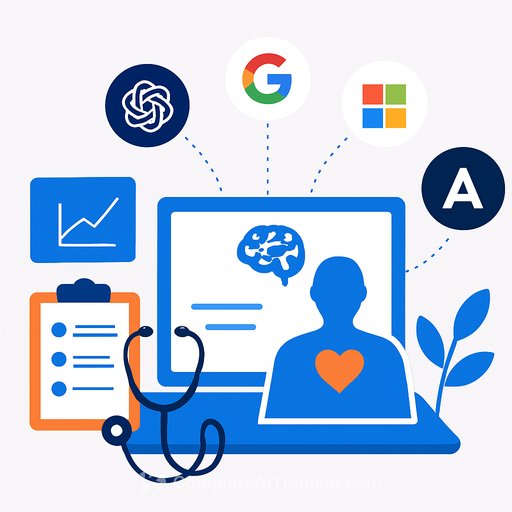
Five major technology companies have shifted their health AI tools from enterprise software to consumer-facing platforms that let users upload medical records, sync wearable data, and get real-time interpretations of lab results. A new analysis in JMIR Publications examines how OpenAI, Google, Amazon, Microsoft, and Anthropic are positioning themselves as the first point of contact for medical guidance.
The move marks a structural change in how people access healthcare. Rather than starting with a search engine or calling a doctor, users can now interact with AI systems designed to triage concerns, suggest next steps, and connect them to clinicians.
How Each Platform Differs
OpenAI's ChatGPT Health relies on scale, offering free access to hundreds of millions of users who can build personalized health workspaces with ongoing tracking.
Google's Verily Me distinguishes itself by having licensed medical providers review AI-generated insights before presenting them to users, positioning itself as a care delivery platform rather than a chatbot.
Amazon's One Medical Health AI links AI triage directly to its pharmacy service and more than 200 physical clinics, creating a closed system for care coordination.
Microsoft's Copilot Health acts as a navigation tool, citing sources like Harvard Health and helping users find clinicians based on insurance coverage and location.
Anthropic's Claude for Healthcare emphasizes safety through conservative medical guidance and prominent disclaimers designed to build consumer trust.
Privacy Compliance Remains Unclear
Some platforms-Amazon's One Medical and Google's Verily-market themselves as HIPAA-compliant. Others, including ChatGPT Health and Claude for Healthcare, use encrypted environments but lack official HIPAA coverage for consumer use.
The analysis warns of concrete risks: AI systems can misdiagnose conditions, and users may develop health anxiety that paradoxically increases demands on human physicians rather than reducing them.
Who Benefits, Who Faces Barriers
These tools could reduce emergency department visits and improve access for rural populations with limited clinician availability. The free or low-cost models remove financial barriers to initial guidance.
The same systems could also encourage unnecessary follow-up care if users misinterpret AI outputs or develop cycles of health-related worry. The quality of medical guidance varies significantly between platforms.
For research professionals working in AI for Healthcare, the shift signals both opportunity and complexity. These platforms generate massive datasets on patient behavior and health outcomes, but questions about data governance, liability, and clinical validation remain unresolved.
Citation: J Med Internet Res 2026;28:e99230. DOI: 10.2196/99230
Your membership also unlocks: