
AI news ·
Johannesburg judge faces scrutiny over alleged AI use in court ruling
A Johannesburg High Court judge is under investigation for allegedly using AI to write a ruling, with errors like a misspelled "Volkswagen" flagged as evidence. Courts currently have no protocols to detect or prevent AI use in judgments.
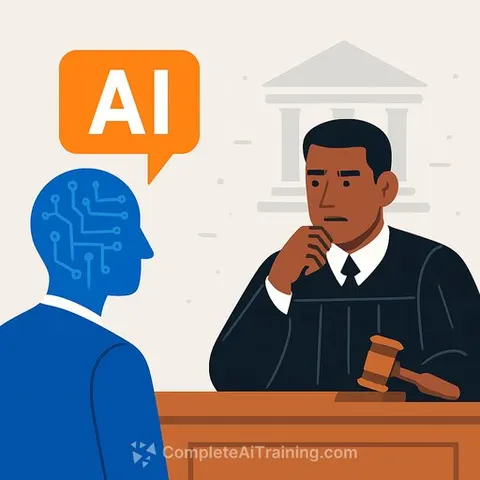
Johannesburg judge faces scrutiny over alleged AI use in court ruling
A Johannesburg High Court acting judge is under investigation for potentially using artificial intelligence to draft a judicial judgment, raising questions about AI reliability in legal proceedings.
The probe centers on alleged "hallucinations" - instances where AI systems generate plausible-sounding but factually incorrect information. One example cited involves a misspelling of "Volkswagen" in the judgment, a type of error commonly associated with AI-generated content.
The case highlights a critical gap in judicial practice. Courts have no established protocols for detecting or preventing AI use in judgment writing, despite the technology's known limitations in accuracy and consistency.
What this means for legal professionals
The incident underscores why lawyers and judges need to understand AI's constraints. AI systems can confidently produce plausible-sounding text that contains factual errors, misquoted case law, or invented legal precedents.
For legal practitioners, this raises practical concerns. If judges are using AI without disclosure or verification, the integrity of judgments becomes uncertain. If lawyers use AI for document review or legal research without proper oversight, they risk missing errors that could harm client interests.
Legal professionals should consider formal training on AI capabilities and limitations. Understanding when and how AI fails is as important as knowing what it can do.
- AI can generate text that appears authoritative but contains fabricated facts
- Current court systems lack detection mechanisms for AI-drafted judgments
- Verification of AI-generated legal content requires human expertise and time
The South African judiciary will likely need to establish clear guidelines on AI use in judicial proceedings. Until then, legal professionals should treat AI-generated content - whether from judges or their own tools - as a draft requiring rigorous verification.
For those working in legal roles, AI for Legal Professionals Courses and the AI Learning Path for Paralegals provide structured education on identifying and managing these risks.