
AI news ·
Johns Hopkins blood test uses DNA fragments to detect liver disease before symptoms appear
Johns Hopkins researchers built a blood test that detects liver fibrosis and cirrhosis before symptoms appear by analyzing DNA fragment patterns. Current methods catch cirrhosis only about half the time; the new test works on a far larger dataset.
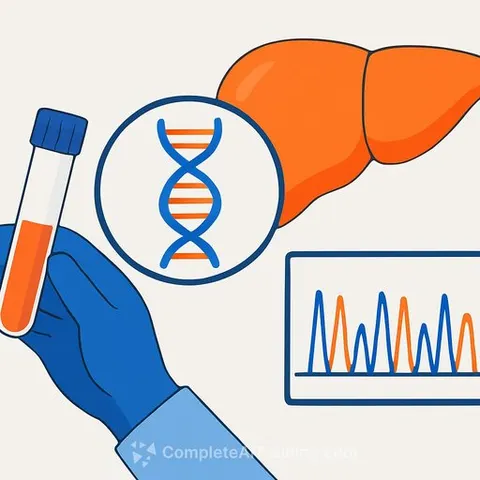
Johns Hopkins Develops Blood Test to Detect Silent Liver Disease Years Early
Researchers at Johns Hopkins Kimmel Cancer Center have created an AI-powered blood test that identifies liver fibrosis and cirrhosis long before symptoms appear. The test analyzes patterns in cell-free DNA fragments circulating in the bloodstream, according to findings published in Science Translational Medicine.
An estimated 100 million Americans have liver conditions that increase their risk for cirrhosis and liver cancer. Existing blood tests often miss early-stage disease, and current methods detect cirrhosis only about half the time.
How the Test Works
The researchers examined whole-genome sequencing data from 1,576 people with liver disease and other health conditions. They analyzed approximately 40 million DNA fragments across thousands of genomic locations in each sample-one of the largest datasets ever used for a liquid biopsy approach.
Machine learning tools identified fragmentation patterns linked to disease. Unlike most liquid biopsy methods that search for specific mutations, this approach studies the fragmentome-how DNA fragments break apart, get packaged, and distribute across the genome.
"The fact that we are not looking for individual mutations is what makes this study so powerful," said Akshaya Annapragada, an M.D./Ph.D. student in the lab. "We are analyzing the entire fragmentome, which contains a tremendous amount of information about a person's physiologic state."
The AI classification system detected early liver disease, advanced fibrosis, and cirrhosis with high sensitivity. The team also developed a fragmentation comorbidity index that predicted overall survival in some cases better than traditional inflammatory markers.
Why Early Detection Matters
Liver fibrosis is reversible in its early stages. If left undetected, it progresses to cirrhosis and increases the risk of liver cancer. Many people at risk don't know they have liver disease.
"If we can intervene earlier-before fibrosis progresses to cirrhosis or cancer-the impact could be substantial," said Victor Velculescu, co-senior author of the study.
Broader Applications Beyond Liver Disease
The research grew from earlier work on cancer detection. While reviewing patient data from a 2023 study on liver cancer fragmentomes, researchers noticed that some individuals with fibrosis or cirrhosis showed subtle disease-related DNA signals despite mostly normal fragmentation profiles.
The team identified fragmentome signals associated with cardiovascular, inflammatory, and neurodegenerative conditions in high-risk patients. The study lacked sufficient patient numbers to build separate classifiers for each condition, but the findings suggest the technology could eventually apply to many chronic diseases.
"A liver fibrosis classifier is distinct from a cancer classifier," Annapragada said. "This is a unique, disease-specific test built from the same underlying platform."
Current Status and Next Steps
The liver fibrosis assay remains a prototype and is not yet available as a clinical test. Researchers plan to validate and improve the liver disease classifier and study fragmentome signatures linked to other chronic conditions.
The work was supported in part by the National Institutes of Health and multiple foundations. Several researchers have financial interests in companies developing cell-free DNA diagnostics, relationships that Johns Hopkins has reviewed and approved.
Learn more about AI for Healthcare applications and AI for Science & Research.