
AI news ·
Kaiser Permanente nurses protest AI monitoring of patient call times and empathy
Tens of thousands of Kaiser Permanente nurses struck over AI tracking calls exceeding 15 minutes. Workers say the metrics force rushed conversations that compromise patient care.
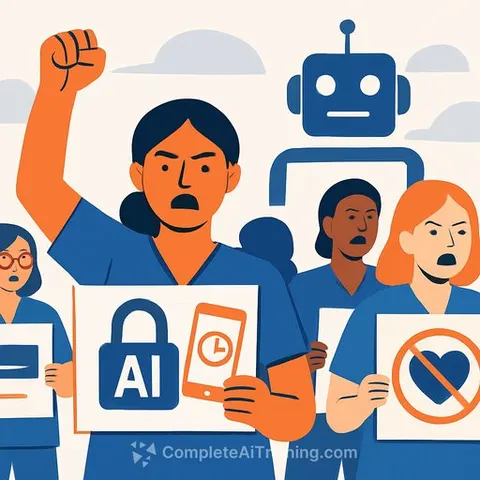
Tens of thousands of Kaiser Permanente nurses and mental health professionals went on strike earlier this year, largely to protest the nonprofit health system's adoption of artificial intelligence tools. At the center of the dispute are AI systems that monitor how nurses handle patient calls - tracking call length, script adherence, and even tone - and that workers say pressure them to limit patient conversations in ways that could compromise care.
In 2024, nurses picketed outside a Kaiser hospital in San Francisco carrying signs that read "Trust nurses, not AI." A recent Cal Matters report, based on interviews with current and former Kaiser nurses, reveals what triggered that pushback.
How Kaiser's AI tools tracked nurses
According to the report, Kaiser used AI to evaluate nurses on how they responded to calls and how long they spent on the phone with patients. The company described one metric as "average handle time." Nurses claimed that if their calls exceeded 15 minutes, they risked being reprimanded or seeing their monthly performance scores drop.
Nurses were also expected to follow a script and limit their advice to a few specific points. The tight monitoring, they said, transformed patient conversations into transactions. AI-driven performance management in healthcare has drawn scrutiny from workers across the industry who see these tools as undermining clinical judgment.
Patient care concerns
Many nurses feared that the rigid metrics would shortchange patients who needed more time - new parents, people who required a translator, or anyone in emotional distress. One nurse described a sensitive call that demanded more care and said, "I had to ask myself: Am I going to get disciplined for going off script or saying more than what is necessary?"
Kaiser also allegedly tested an AI tool in 2024 that assessed nurses' tone and empathy levels. After nurses protested, the company stopped using it. Union representatives said managers indicated the program might eventually be revived.
Kaiser's response
A Kaiser spokesperson said the company "uses AI responsibly and with human oversight, always prioritizing patient safety, privacy, and equity. AI tools are designed to support our clinicians and care teams, not to replace them. Medical decisions remain in the hands of our clinicians."
The spokesperson denied that nurses were disciplined for longer calls. "Kaiser Permanente does not use Average Handle Time to assess call response performance or enforce call time metrics. Any tools used in contact center settings support our quality assurance efforts and have human review and oversight. At Kaiser Permanente, our nurses are supported and empowered to take the time needed to deliver compassionate care and fully address each patient's care needs."
Why this matters for healthcare professionals
This conflict shows how AI performance monitoring can create a direct clash between productivity metrics and patient-centered care. For nurses and other clinicians, these systems can reshape daily work in ways that feel at odds with professional judgment - limiting time with patients, enforcing scripts, and ranking empathy on a scale. Even when tools are framed as aids, the line between support and surveillance can blur quickly if metrics drive discipline or pay. Healthcare professionals need to understand what AI tools their employers are using, how those tools are evaluated, and what recourse exists when the technology undermines their ability to provide safe, thorough care.