
AI news ·
Kenya forms cabinet committee for AI as national strategies increase demand for professional AI training
Kenya approved a new cabinet committee to coordinate national AI policy. The move highlights rising demand for skilled workers and structured AI training programs.
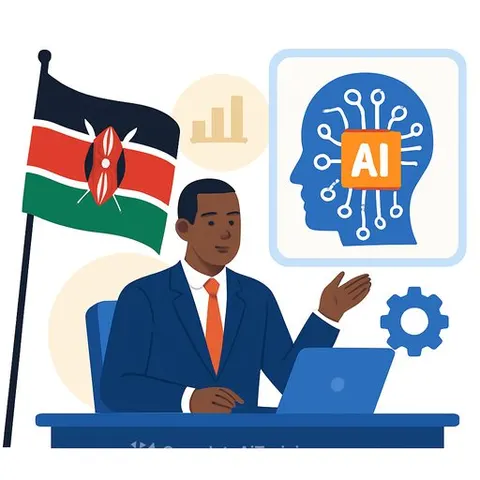
Kenya has approved a new Standing Cabinet Committee to coordinate artificial intelligence policy, signaling a national push to integrate AI across government and industry. The move underscores a growing reality: as countries formalize AI strategies, demand for skilled professionals and structured training programs rises sharply.
Kenya's AI governance model
The committee will oversee AI policy while supporting innovation, public service transformation, productivity, employment, and economic growth. It will establish governance frameworks for responsible, ethical, and secure AI implementation across industries. This top-level coordination builds on Kenya's existing digital infrastructure investments and reflects a broader trend: governments now see AI success as dependent on skilled people, not just technology.
For executives shaping organizational strategy, this mirrors the need to invest in AI for Executives & Strategy training to align teams with governance and implementation goals. National AI strategies become much more effective when supported by a workforce capable of translating policy into measurable outcomes.
Why national AI strategies increase training demand
Government policies create the framework for AI adoption, but people drive implementation. Every organization introducing AI needs employees who can use AI tools, develop AI-powered workflows, manage data responsibly, and comply with governance requirements. As Kenya advances its AI agenda, demand is expected to grow across public and private sectors. Businesses will need professionals who can identify AI opportunities, improve operational efficiency, and automate routine processes. Government agencies will require teams capable of deploying AI responsibly while maintaining transparency and accountability.
These requirements increase the need for structured learning programs and globally recognized AI certifications that bridge the gap between theoretical knowledge and practical workplace application. Training providers that offer certification programs in foundational AI knowledge, industry-specific applications, responsible AI practices, and emerging technologies are positioned to meet this demand.
What business leaders can learn from Kenya's initiative
Kenya's decision to establish a dedicated AI committee demonstrates that successful AI adoption requires coordinated decision-making rather than isolated technology projects. Organizations can apply the same principle by creating clear AI strategies supported by executive leadership and cross-functional collaboration. The emphasis on responsible AI governance also highlights the need for employees who understand both the technical and governance aspects of AI, making continuous learning a strategic investment.
Finally, Kenya's focus on innovation and economic growth reinforces the importance of developing talent alongside technology. AI tools alone cannot create competitive advantage unless employees know how to use them effectively, responsibly, and creatively.
Why this matters for executives and strategy
National AI strategies like Kenya's signal a structural shift in workforce requirements. Executives who treat AI as a technology upgrade rather than a talent transformation will fall behind. The most effective response is to build internal AI governance structures and invest in upskilling programs that prepare teams for practical AI implementation. As more countries follow Kenya's lead, organizations that prioritize AI education will secure a competitive edge in hiring and innovation.