Korean Air Introduces AI Chatbot for Faster, More Efficient Travel Assistance
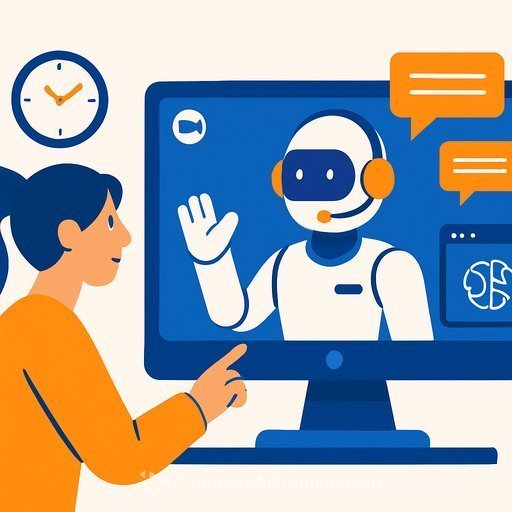
Korean Air has launched an AI-powered chatbot on its website and mobile app to give travelers quicker, more precise help. For customer support leaders, this is a clear signal: intent-aware automation, stronger self-service, and cleaner handoffs are moving from "nice to have" to baseline.
The chatbot personalizes answers based on a traveler's itinerary in real time. Ask, "I'm flying economy from Incheon to Paris. How many bags can I check in?" and it returns the exact allowance for that booking-no manual hunting, no guesswork.
What sets it apart
Instead of scripted trees, the system uses NLP to interpret customer intent and context. That means natural conversation works-no rigid keywords, fewer dead ends, and less escalation for simple questions.
It's embedded directly into the web and app experience, so customers get help where they already are. The result: higher containment on routine requests and more time back for agents to focus on edge cases and high-value work.
Accuracy and trust by default
Responses include source references and direct links to relevant pages, reducing misinformation and making it easy for customers to verify details. Korean Air supports this with a dedicated database that checks content before it reaches the customer.
This approach cuts recontacts and lifts CSAT because answers are consistent, traceable, and fast. It also creates a cleaner feedback loop for knowledge updates and policy changes.
Multilingual coverage at scale
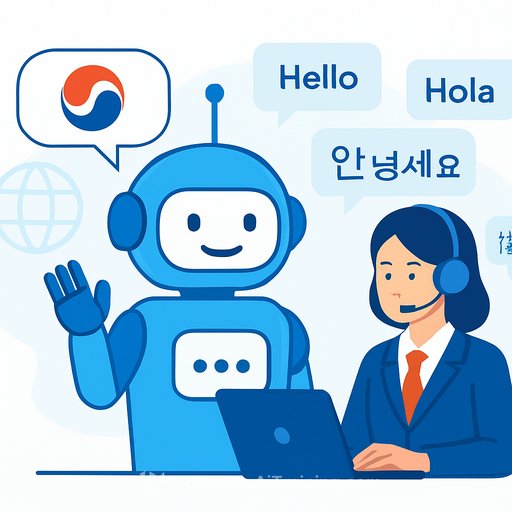
The chatbot supports 13 languages to serve a global audience. That's critical coverage across major routes and tourism markets.
- Korean, English, Simplified Chinese, Japanese
- Traditional Chinese, French, German, Italian, Portuguese
- Russian, Spanish, Thai, Vietnamese
For support teams, this reduces language bottlenecks and provides a consistent experience for international travelers.
Seamless transition to human support
When a case needs empathy or complex decisioning, customers can type "connect to an agent" and continue in the same chat window. Today this is available in English and Korean, with more languages planned.
That continuity matters. A smooth handoff-carrying context, history, and intent-prevents repeat questions, shortens handle time, and protects CSAT.
Roadmap: from answers to actions
Next phases include ticket purchasing, reservation management, and more task-level workflows inside the chatbot. Think: one interface for discovery, booking, updates, and real-time support.
For operations, that means fewer channel switches, tighter process control, and clearer attribution for what customer intents cost and where to optimize.
What customer support teams can learn (and apply now)
- Lead with intent: route by customer goal, not just keywords.
- Answer with receipts: include links and source notes in responses.
- Go multilingual with a shared glossary and style guide for consistency.
- Define handoff rules: triggers, SLAs, and what context must carry over.
- Measure what matters: containment rate, FCR, AHT, CSAT, deflection by intent.
- Close the loop: label failed conversations, retrain, and version your KB.
- Respect privacy: log consent, mask PII, and set retention windows.
- Agent assist first, then full automation for high-confidence flows.
Quick implementation checklist
- Map your top 50 intents by volume and impact; start with 10-15 high ROI.
- Connect a verified knowledge base; add inline links in every answer.
- Create language packs (terminology, tone, examples) for each supported locale.
- Set escalation criteria (confidence thresholds, risk topics, high-value bookings).
- Pass conversation context to agents and surface next-best actions.
- Instrument analytics: intent accuracy, drop-off points, and recontact reasons.
- Publish a change log so agents know what the bot can/can't do this week.
Why this matters for tourism and ops
Travelers get instant answers on baggage, flight status, and check-in without waiting in queues or phone trees. Support teams get fewer repetitive tickets, stronger consistency, and 24/7 coverage.
As more providers adopt AI-driven service, international visitors find it easier to plan and move through trips-lifting satisfaction and repeat travel. Clear information in multiple languages reduces friction at every step.
Useful resources
- IATA baggage guidance for standard rules customers often ask about.
- AI courses by job role to upskill support teams on chatbots, automation, and agent assist.
Bottom line: Korean Air's AI chatbot shows how to blend speed, clarity, and human backup. If you're running support, the playbook is here-intent-first Design, verifiable answers, multilingual reach, and seamless escalation.
Your membership also unlocks: