
AI news ·
KPMG report finds 92% of tech executives expect managing AI agents to become important skill
Ninety-two percent of tech execs say managing AI agents will be critical within five years. By 2027, digital assistants will make up 36% of core tech teams, up from 28%.
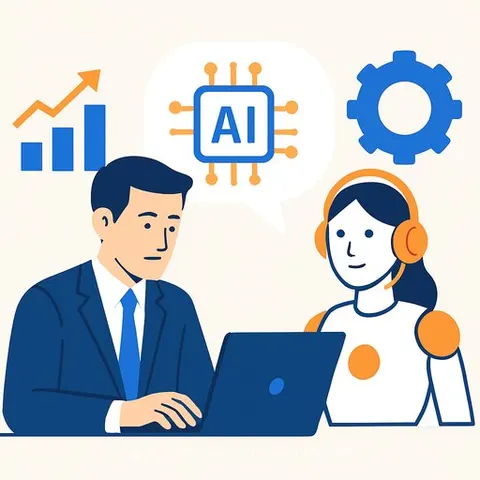
Ninety-two percent of technology executives say managing artificial intelligence agents will be a critical skill within five years, according to a new KPMG report surveying 2,500 leaders across 27 countries. The adoption of agentic AI is forcing organizations to restructure their teams and rethink operational strategies as digital workers take on larger roles.
Workforce shifts and team structures
Eighty-eight percent of organizations are already building agentic AI into their systems. This investment will alter team compositions significantly over the next two years. Digital assistants are expected to make up 36 percent of core technology teams by 2027, an increase from 28 percent in 2025.
Zack Kass, global AI advisor and former head of go-to-market at OpenAI, recommends moving toward smaller teams and flatter structures to increase adaptability. "The future will not be defined by what machines can do. It will be defined by what we want machines to do," Kass said.
He added that smaller teams allow organizations to be more forward-looking, shifting the focus from individual productivity to broader operational changes. As organizations flatten their hierarchies, leaders must understand how to direct both human and digital workers, a core focus of AI for Management programs.
External partnerships and security risks
Ninety percent of technology executives plan to strengthen partnerships to access external expertise for this integration. This reliance on third-party collaborators introduces significant security, governance, and data protection concerns.
Noelle Russell, an AI solutions architect and strategic advisor, recommended a selective approach to building internal capabilities. "Pick the areas that you want to keep in-house for domain expertise, then choose trusted partners to fill in the gaps across your portfolio," Russell said. "Paying attention to what you build means applying rigor and discipline to every model you select."
Umesh Sachdev, co-founder and CEO of Uniphore, highlighted the competitive necessity of these systems. "Companies that learn to use AI and AI agents and all these architectures effectively are likely to leave their peer groups behind," Sachdev said. "Right now that is coming down to the leadership of companies and departments and teams." Executives driving this competitive advantage must tie these technologies to broader business goals, which requires targeted AI for Executives & Strategy education.
Long-term threats and quantum computing
Beyond immediate agentic technologies, organizations face long-term challenges from emerging fields like quantum computing and artificial general intelligence. Security remains a primary concern, with 41 percent of executives worried they are falling behind in preparing for quantum-related encryption threats.
Guy Holland, global leader of the CIO Center of Excellence at KPMG International, described the current environment as the threshold of the Intelligence Age. He pointed to AI rewriting competition rules, looming quantum breakthroughs, and geopolitical uncertainty as forces leaving organizations grappling with what comes next.
Why this matters for managers
Managers must transition from directing only human employees to orchestrating hybrid teams of humans and AI agents. This requires updating performance metrics, redefining daily workflows, and acquiring new technical oversight skills to manage third-party integrations securely.