Half of firms that cut customer service staff due to AI will rehire by 2027
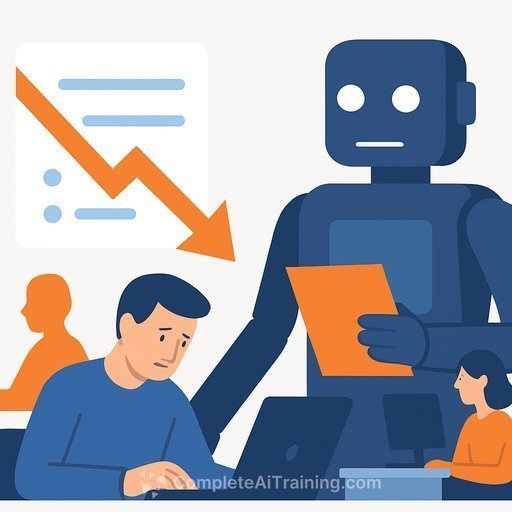
Here's the blunt truth: the AI layoff story you saw all over the news was oversold. According to new research from Gartner, most 2025 workforce cuts in customer service were driven by economic headwinds, over-hiring cleanup, and cost control - not AI replacing humans.
"While AI-driven layoffs have captured attention, the reality is more complex," said Kathy Ross, Senior Director Analyst at Gartner's Customer Service and Support practice. The firm expects that by 2027, half of companies that attributed headcount reduction to AI will rehire people to perform similar functions - under different job titles - as they run into AI's limits and rising customer expectations.
What really happened in 2025
Layoffs often cited "AI" but were largely funding reallocations and market corrections. Some organisations trimmed teams to free up budget for future AI bets, not because AI had already delivered the goods.
Gartner also warns that layoff headlines, paired with AI hype, are pressuring leaders to "do more cuts." Before you act, separate signal from noise and build your own plan.
The myth of agentless service
Despite the noise, only a fifth of customer service leaders actually reduced agent staffing due to AI. Most report steady headcount while supporting more customers.
"AI isn't mature enough to fully replace the expertise, empathy, and judgment that human agents provide. Relying solely on AI right now is premature and could lead to unintended consequences," said Emily Potosky, Senior Director, Research, Customer Service and Support at Gartner.
Pressure from the top? Slow down and show the plan
Move from reactive cuts to proactive strategy. Propose a phased, data-led approach that protects customer experience and keeps you flexible as the tech improves.
Gartner's guidance: make strategic reductions over time, not sweeping headcount slashes. Reinvest in human strengths where AI struggles, and set clear success criteria before expanding automation.
Action plan for the next 12 months
- Map current automation reality: Measure bot containment, post-bot escalation, CSAT by channel, AHT, and cost per resolution.
- Define the "human advantage" work: Escalations, edge cases, empathy-required moments, revenue-sensitive accounts.
- Pilot with guardrails: Set deflection thresholds, mandatory escalation rules, and intent confidence minimums before handoff.
- Protect quality: Add QA sampling for bot and human, random audits, conversation summarisation checks, and compliance reviews.
- Reskill, don't just reduce: Shift roles into AI quality analyst, knowledge engineer, bot operations specialist, or customer experience designer.
- Build C-suite reporting: Weekly trends on containment, abandonment, backlog, first contact resolution, and the cost model behind each change.
- Model total cost of ownership: Include training data, supervision, prompt/flow maintenance, drift, security reviews, and vendor fees - not just license cost.
Where AI actually helps today
- Agent assist: Suggested replies, auto-summarisation, knowledge surfacing, and after-call work reduction.
- Smart triage and routing: Intent detection, priority tagging, skills-based assignment.
- Self-service improvement: Knowledge gaps analysis, content generation and updates with human approval.
- Quality and compliance: Conversation scoring, policy checks, trend detection.
- Proactive service: Alert customers to known issues, next-best-action nudges with opt-outs.
Metrics to watch (and cap)
- Containment rate: Cap it where CSAT holds; beyond that, force escalation.
- Post-bot escalation: Track handoff quality and time-to-resolution after bot contact.
- Repeat contacts / FCR: If repeats climb, your bot is creating work, not saving it.
- CSAT/NPS by path: Separate bot-led vs. human-led outcomes.
- Cost per resolution: End-to-end, including supervision and rework.
- Ramp and productivity: Time-to-proficiency with AI assist vs. without.
Risks of cutting too fast
- Service gaps during spikes: Outages and launches will overwhelm brittle automation.
- Customer churn: Poor bot experiences push high-value customers to competitors.
- Brand damage: Social blowback is expensive to undo.
- Hidden AI costs: Drift, maintenance, and compliance erode the quick "savings."
- Lost institutional knowledge: Hard to rebuild once senior agents are gone.
What to tell your C-suite
- Yes, automate - but tie it to customer outcomes, not vanity containment.
- Adopt in phases - pilot, measure, then scale; keep a hard stop rule if CSAT dips.
- Rebalance, don't hollow out - shift roles and rehire into new titles as needs evolve.
- Protect revenue moments - guarantee human access for high-value and high-risk interactions.
Bottom line
AI is useful, but it's not a replacement for human judgment and empathy - at least not yet. Expect many firms that cut deep to rehire by 2027, often into roles that blend service expertise with AI oversight.
Play the long game: automate what's repeatable, keep humans on what matters, and prove every step with data. That's how support leaders keep quality high while moving the operation forward.
Resources
About the research
Gartner's report polled 321 customer service and support leaders in October 2025 and was released earlier this month.
Your membership also unlocks: