LangChain's Six-Stage Framework for Production AI Agent Development
Many enterprises face challenges when moving AI agents from prototype to production. A key reason is skipping essential planning steps, particularly the design of Standard Operating Procedures (SOPs). LangChain’s six-stage framework addresses this gap by putting SOP design front and center before any technical build begins.
The framework was highlighted by IBM’s VP of AI Platform, Armand Ruiz, who noted that most companies overlook SOPs, leading to unreliable and ineffective AI agents. This methodology offers a clear path that helps teams avoid common pitfalls and build AI agents that meet enterprise standards for reliability, compliance, and scalability.
Why SOPs Matter Before Building AI Agents
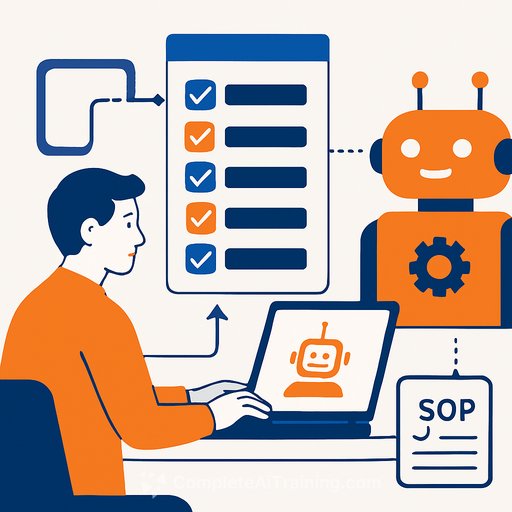
SOPs define the exact steps an AI agent must follow to complete tasks successfully. Without them, AI deployments often fail to handle multi-turn conversations or complex workflows, with success rates sometimes as low as 35%. Designing SOPs first ensures the AI agent’s behavior aligns with real business needs and user expectations.
This approach is especially relevant for enterprises automating business processes, customer support, and workflow optimization where consistent performance is critical.
The Six Stages Explained
- Stage 1: Define Use Cases
Identify realistic scenarios the AI agent will handle. Gather 5-10 concrete examples involving actual tasks. This phase takes about 1-2 weeks and involves Product Owners and Subject Matter Experts. The goal is to clarify the agent’s scope and set a solid foundation for development. - Stage 2: Design Standard Operating Procedures
Break down each task into clear, step-by-step workflows that a human would follow. Collaboration between Product Managers and Subject Matter Experts ensures SOPs are comprehensive and practical. This stage also lasts 1-2 weeks and produces the backbone for agent behavior. - Stage 3: Build MVP and Core Prompts
Transition into technical work by creating a minimum viable product (MVP) focused on core prompts. These prompts handle the agent’s reasoning and task execution using static data for validation. Product Managers and AI/Prompt Engineers work closely to develop functional agent architecture during this 1-2 week phase. - Stage 4: Expand Capabilities
After validating core functions, teams extend the agent’s abilities to cover more scenarios and edge cases. This phase involves iterative testing and refinement to improve accuracy and user experience. - Stage 5: Integrate with Systems
Connect the AI agent to relevant enterprise systems such as CRM, ticketing, or workflow platforms. Integration ensures the agent operates within existing business processes seamlessly and can access necessary data in real time. - Stage 6: Continuous Monitoring and Improvement
Deploy the agent in production with ongoing monitoring to track performance and user feedback. Regular updates and enhancements maintain reliability and adapt to changing business needs.
Who Should Use This Framework?
This framework is ideal for enterprise teams involved in AI agent development, including Product Owners, Subject Matter Experts, Engineers, and Support staff. It guides cross-functional collaboration to build agents that work reliably in production environments.
By emphasizing SOP design upfront, teams can avoid common failures and improve multi-turn task success rates significantly. The framework provides a structured path from initial idea to scalable AI agent deployment.
Learn More and Get Started
For professionals in customer support, IT, and product development aiming to build or improve AI agents, adopting this structured methodology is a practical step. To deepen your skills in AI development and implementation, explore relevant courses and certifications at Complete AI Training.
Your membership also unlocks: