
AI news ·
Leaders must treat AI as an organisational challenge, not a technology one, Ibarra argues
Most companies are failing at AI not because of the technology, but because leaders aren't changing how they lead. The real work is redesigning culture, workflows, and teams.
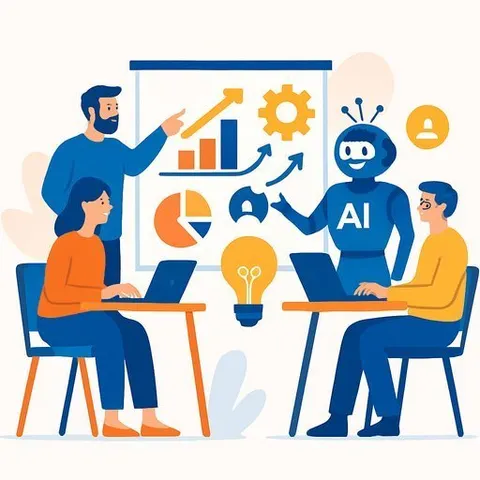
AI is a leadership problem, not a technology one
Generative AI disrupts how organisations operate. But most leaders are approaching it wrong. They focus on the technology itself when the real constraint is their organisation's ability to adapt, learn and transform.
The challenge runs deeper than deploying new tools. It demands that leaders rethink their roles, redesign workflows, reshape culture and build teams capable of continuous learning. Success depends entirely on people - and on leaders' willingness to change how they lead.
Look outward first
Leaders must maintain external networks and benchmark against what competitors are doing. Organisations become insular, relying too heavily on internal perspectives to understand what's real in AI and where value is actually being created.
This external view enables leaders to form a clear vision. Without it, they react to noise rather than shaping direction.
Shift from delivery to transformation
Executing against predefined KPIs is no longer enough. Leaders must question how work gets done, not just how well it gets done.
That means examining work processes and culture simultaneously. Microsoft eliminated time-consuming quarterly reporting processes that had become "corporate theatre," freeing people to focus on customer-facing work instead. Culture is shaped by systems and processes. If you want people to behave differently, change what you're asking them to do, how their time is allocated and what gets recognised as valuable.
People are the constraint and the enabler
AI disrupts people's sense of identity. Employees question their relevance and career security. Leaders must create psychological safety so people feel safe to experiment, share what they're learning and adapt.
This requires shifting from control to coaching. With new tools reducing the need for monitoring and compliance, the leader's role becomes enabler. The goal is autonomous teams that act quickly and agilely.
At the same time, leaders must be honest about which team members can accept change. High performers who resist transformation may struggle in the role ahead.
Combine empathy with organisational design
Soft skills alone don't work. Leaders must pair empathy with concrete changes to processes, incentives and workflows.
This includes being explicit about experimentation. What constitutes acceptable failure? How are risks managed? Without clarity and empathy, people become too afraid to try new things, resulting in stasis.
Leaders must also be honest about uncertainty. Many organisations project false certainty when navigating unknowns. Being open about what is known, what is being tested and what may change builds credibility and trust.
Leadership varies by level
Senior leaders set direction, shape culture and model change. They create environments where learning - by definition involving mistakes and uncertainty - is possible.
Middle managers do much of the real work. They connect teams to the outside world, turn strategy into action and feed insight back up. They manage their bosses, redefine their roles beyond internal delivery and bring in political support. They're not just managing deliverables; they're actively shaping how the organisation adapts.
AI does not diminish leadership importance. It amplifies it. The technology is powerful, but it cannot resolve the organisational, cultural and human challenges that determine whether it creates real value. That remains the work of leaders.
Learn more about AI for Executives & Strategy or explore AI for Management to develop your approach to organisational transformation.