Learning with AI: Strengthening Computing Education in an AI-Shaped World
Published: 13 Mar 2026
The College of Computing and Data Science (CCDS) at Nanyang Technological University, Singapore is embedding artificial intelligence into how computing is taught, practised and assessed through its Learn with AI framework. The goal: keep foundations strong while preparing students to work capably with AI-enabled development environments. The focus is on accountability, rigour and engineering judgement-especially when collaborating with agentic AI systems.
Why fundamentals still matter
"Artificial intelligence is a multiplier. But if the multiplicand is zero, the outcome is zero." That message sets the tone for CCDS's approach: AI can speed up work, but it cannot replace solid computational thinking, clear reasoning and sound design choices.
Accountability-first use of AI
Students engage with AI tools while remaining responsible for their own reasoning and results. They must justify design decisions, check correctness and exercise control judgement, even when AI produces code or explanations at speed.
- AI-ON assessments: Students use AI-assisted workflows and must validate outputs, document prompts, and explain decisions.
- AI-OFF assessments: Students work without AI assistance to demonstrate independent mastery of core concepts and techniques.
AI integration across core computing courses
The framework is live in a pilot group of core courses, covering theory, systems and engineering practice.
SC1007 - Data Structures and Algorithms
Students solve problems in an AI-supported environment that offers guided hints and feedback. They alternate between explaining algorithmic reasoning, implementing solutions independently and reviewing AI-assisted outputs. Practice sets are adapted to each student's skill level to build algorithmic fluency and the ability to critique AI-generated code.
Dr Newton Fernando notes: "AI systems can generate code remarkably quickly, but knowing why that code works remains fundamental. Students learn to use these tools responsibly while still making sound design decisions, reasoning through problems, and verifying the correctness of their solutions."
SC2000 - Probability and Statistics for Computing
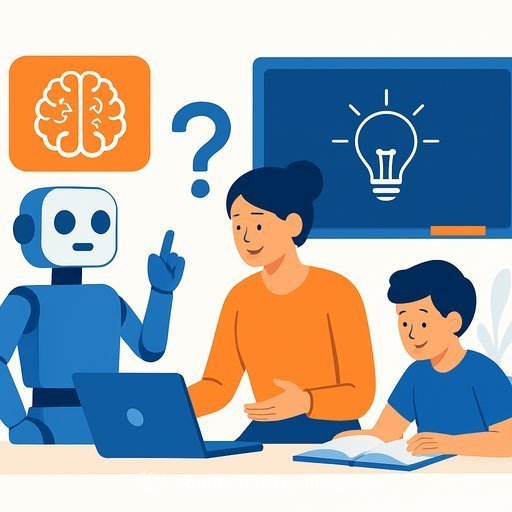
A custom AI tutor, trained on course materials, supports study and revision. It acts as a guided assistant-not a solution dispenser-prompting students to work through the logic. Optional assignments encourage AI-assisted coding for larger datasets and simulations while keeping the spotlight on core mathematical ideas.
SC2006 - Software Engineering
Students get hands-on with coding agents to explore AI-assisted development practices. They reflect on AI outputs and assess where tools help with debugging, documentation and code extension. By building solutions manually first, then layering AI into the workflow, the course reinforces that engineering judgement stays central.
SC4052 - Cloud Computing
Students examine how AI is influencing modern cloud systems and software architectures. They use AI-assisted tools to analyse scheduling algorithms, probe security issues and explore next-gen cloud platforms influenced by generative AI. Industry talks and projects expose students to AI-driven cloud optimisation and agentic software systems.
Beyond the classroom: AI-enabled development workflows
Final-year students will join an intensive programme by AI Singapore (AISG) covering AI-enabled development workflows. The programme offers free access to advanced AI coding assistants and guided exercises in context engineering, agent development and AI-assisted software architecture. Participants who complete the programme receive an AISG certificate.
- Tools include AWS Kiro, GitHub Copilot, OpenAI Codex and Z.ai GLM.
- Exercises emphasise prompt/context design, evaluation, safety checks and productive human-AI collaboration.
What this means for educators
If you are updating curriculum or assessment policy, this model is pragmatic and implementable. Key moves to consider:
- Adopt dual-mode assessment (AI-ON and AI-OFF) with clear rules of engagement and integrity checks.
- Require reasoning traces: prompt logs, decision journals and verification steps for AI-assisted work.
- Integrate domain-specific AI tutors trained on your own materials to keep guidance aligned with course intent.
- Teach students to critique AI outputs: specification checks, test coverage, invariants and threat modelling.
- Prioritise fundamentals: data structures, algorithms, probability, software design and systems thinking.
Governance and ethics anchors
Accountability frameworks help keep AI use grounded in professional duty. Useful references include the ACM Code of Ethics and the NIST AI Risk Management Framework. Embed these into course policies and project rubrics so expectations are explicit.
Preparing graduates for AI-enabled computing environments
By weaving AI directly into coursework-and holding the line on rigour, accountability and judgement-CCDS is developing graduates who can think clearly, build responsibly and work effectively with agentic systems. The Learn with AI framework signals a practical path forward for computing education: combine strong fundamentals with structured, responsible AI use.
Further resources
Your membership also unlocks: