
AI news ·
Leslie Cordie co-edits book on AI in adult education based on global survey
A survey of 1,947 educators across 36 countries finds most view AI as a teaching tool, not a threat. Instructors mainly want institutional training to use it well.
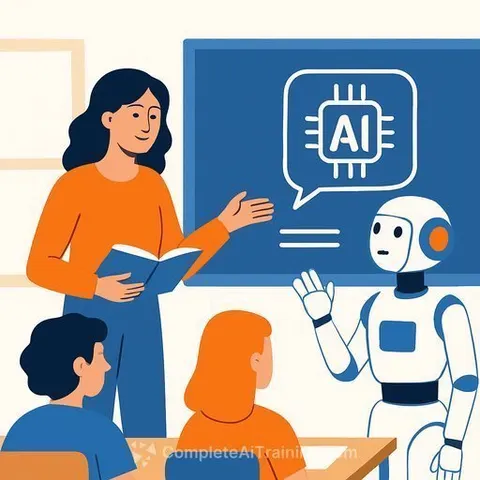
A global survey of 1,947 educators, trainers, and consultants across 36 countries found widespread optimism about artificial intelligence in adult education. The results, published in the open-access book "Navigating the AI Frontier in Adult Education," show that most educators see AI as a tool to improve teaching and reduce repetitive tasks - not as a threat.
Beyond fear and hype
Leslie Cordie, an associate professor of adult education at Auburn University and co-editor of the book, argues that both the utopian and dystopian narratives around AI miss the point. "The real conversation isn't whether AI is coming," Cordie said. "It's already here." Instead of banning AI or treating it as a shortcut, she asks her students to experiment with it, question its outputs, and think critically about what it produces.
Cordie follows her own advice. She uses AI to brainstorm research ideas, redesign course materials, create grading rubrics, and identify journals for publication. The technology gives her more time for meaningful conversations with students and deeper collaboration. "It's making me a better educator," she said.
A global survey reveals optimism
The book grew out of a survey administered by Singapore's Institute for Adult Learning. Rather than alarm, the data showed that educators around the world largely view AI as a way to create new learning opportunities. Their primary concern was not the technology itself, but whether they would receive enough guidance and institutional support to use it well.
For Cordie, that finding reinforced what she has long believed: adult education happens through conversations, videos, career changes, and unexpected challenges - and now, through AI. When used thoughtfully, she said, the technology does not replace critical thinking. It creates more opportunities to practice it. Many educators seeking structured ways to build these skills explore AI for Education Courses & Certifications to gain practical strategies.
Redefining the classroom
Cordie imagines classrooms becoming more interactive. Students may one day hold conversations with AI-generated historical figures or collaborate with technology in ways that don't yet exist. She already sees AI helping learners prepare for interviews, organize research, and strengthen presentations. The ability to keep learning, she believes, may become more valuable than any single skill.
Resources like the AI for Teachers Learning Path reflect the same principle: helping educators integrate AI into their practice without losing the human element. Cordie insists that technology changes, but one thing won't. "The learner will always bring something to the table," she said.
Why this matters for educators
The survey's findings point to a clear need for institutional support and professional development. Educators are not resisting AI - they are asking for training. Schools and training providers that invest in structured AI guidance will likely see faster, more confident adoption among their staff. For individual instructors, the message from Cordie's work is direct: experiment with AI, question its answers, and use it to reclaim time for the human work of teaching.