
AI news ·
Liberal arts skills gain new relevance as AI handles more technical work
Employers are shifting back toward liberal arts skills-critical thinking, communication, and ethical reasoning-as AI handles routine technical tasks. The change reverses decades of emphasis on job-specific training.
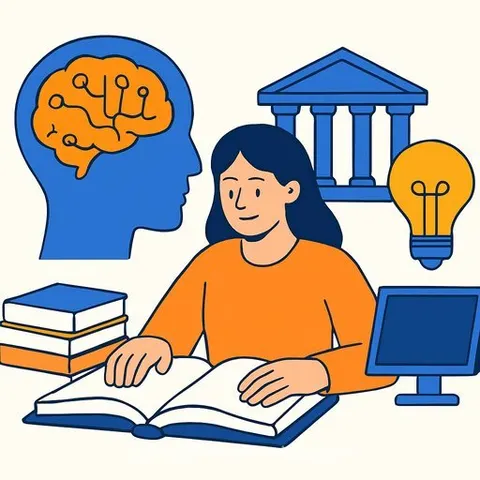
Liberal Arts Education Gains Ground as AI Handles Technical Work
As generative AI tools handle routine technical tasks, employers increasingly value skills that machines cannot replicate: critical thinking, communication, and ethical reasoning. This shift is reversing decades of emphasis on job-specific training and returning focus to broad intellectual development.
The change mirrors previous economic transitions. When machines automated physical labor during the Industrial Revolution, workers moved into knowledge-based jobs. When computers and the internet reshaped work in the 1990s, the question became whether college should teach thinking or job skills. For many students and families, the answer favored specialization.
That calculation is shifting again. ChatGPT and similar tools now generate code, summarize research, and solve complex equations in seconds. What they cannot do is determine which questions matter.
The Work Machines Cannot Do
A medical researcher studying a new disease can use AI to analyze thousands of gene sequences in minutes. But determining whether those results make biological sense requires human judgment, skepticism, and creativity. That combination of skills-questioning assumptions, interpreting evidence, connecting ideas across fields-defines the liberal arts approach.
As AI becomes better at producing answers, the real challenge shifts to asking better questions. This favors graduates trained to think across disciplines rather than within narrow specialties.
What Employers Want Now
The collaboration between humans and AI requires different skills than competition with machines. Workers need to understand what AI can and cannot do, then direct it toward meaningful problems.
Employers are beginning to place greater weight on abilities that schools like Bates have long emphasized: critical thinking, clear communication, and ethical reasoning. These are not skills AI can replicate.
The purpose of college education may be returning to what liberal arts colleges have always attempted: teaching students how to think clearly, connect ideas between disciplines, and navigate complexity that no algorithm fully understands.
For educators, this represents both a challenge and an opportunity. AI for Education resources can help institutions integrate these tools into curricula while maintaining focus on the thinking skills that remain uniquely human.