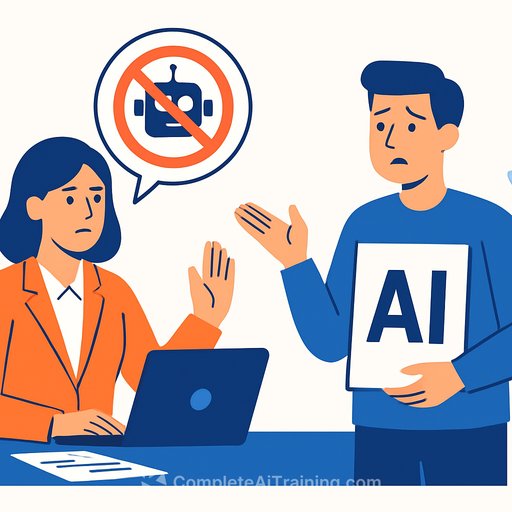
Agents Are Saying It Clearly: Keep AI Out of Your Submissions
More agencies are updating their submission guidelines with one clear ask: don't use AI to write queries, synopses, or manuscripts. They're seeing a marked change in the feel of incoming work, and it's raising red flags.
If you're querying this year, assume agents are on high alert. Here's what they're noticing, why it matters, and how to adapt without losing momentum.
What agents are seeing
- Prose that's clean but flat-technically tidy, emotionally empty.
- Generic voice and echoes of the same beats across multiple submissions.
- Cliché-heavy phrasing, overwritten metaphors, and vague scene details.
- Inconsistent voice between sample pages, synopsis, and query.
- Factual slips and made-up "sources" from unverified research.
- Formatting and conventions that don't match standard industry practice.
Why this matters
Trust is the currency in agent-author relationships. If your pages read like they were machine-assembled, that trust erodes before a conversation starts.
- Auto-rejections and reduced requests for fulls/partials.
- Some agencies now require disclosure of AI use; non-disclosure can sink interest.
- Copyright and rights risk if AI-generated text is included. The U.S. Copyright Office has stated it won't protect non-human authored content (official guidance).
- Awards, grants, and programs may require human-authored work only.
What to do before you submit
- Read each agency's guidelines line by line. Follow them exactly.
- Write your pages yourself. Use your own drafts in the sample, query, and synopsis.
- If an agency requests disclosure, give a simple, factual note on any AI assistance (or confirm none was used).
- Keep process notes and dated drafts to show authorship if asked.
- Audit voice: read your pages aloud, highlight clichés, replace abstractions with concrete detail.
- Use human readers. Get feedback from a critique group or trusted beta readers.
- Match industry norms: word counts, genre positioning, and standard manuscript format.
If you use AI at all, keep it outside the submission
You don't need AI to write your book. If you still use it, keep it away from anything you'll submit and treat outputs as disposable notes.
- Potentially useful: brainstorming comp titles to research, rough timeline planning, tracking tasks.
- Off-limits for submissions: writing your query, synopsis, sample pages, or revisions you plan to send.
- Fact-check everything with primary or authoritative sources before it touches your draft.
- Avoid pasting unpublished work into public tools; protect your IP and confidential ideas.
Simple disclosure line (only if requested)
Use one clear sentence. Example: "No AI-generated text is included in my query, synopsis, or manuscript." If you used tools for admin (e.g., outlining or scheduling), specify that and note that all prose is human-written.
How to stand out without shortcuts
- Obsess over pages 1-10. Distinct voice and concrete detail beat polish-without-personality.
- Make scene goals and stakes unmissable. Specificity signals human intent.
- Trim filler. Keep only what moves story, deepens character, or delivers texture you can feel.
- Write your synopsis from your brain, not a template. Clarity over theatrics.
Further reading
- Authors Guild: AI and authors' rights
- U.S. Copyright Office: AI policy and guidance
- AI for Writers - practical ways to keep your craft front and center while staying informed.
Bottom line: agents want your voice, your judgment, your pages. Lead with the work only you can write, and you'll clear the noise fast.
Your membership also unlocks: