
AI news ·
Local water stress drives AI data center opposition despite modest national usage
Roughly two-thirds of 809 planned US AI data centers are in severe drought areas, creating a local permitting bottleneck. Water use could reach 73 billion gallons by 2028.
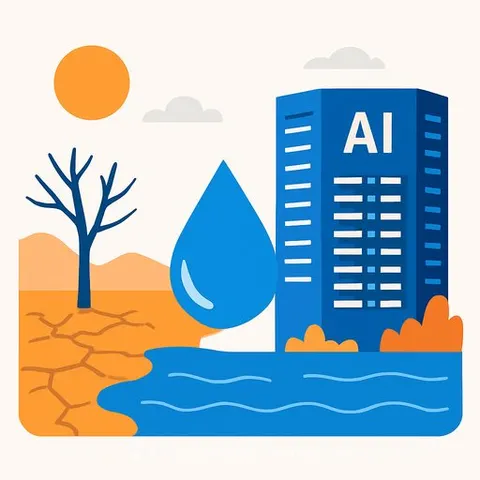
According to The Guardian, "roughly two-thirds of 809 planned AI data centers in the United States are expected to be built in areas experiencing severe drought." This geographic mismatch is turning local water stress into the primary bottleneck for AI infrastructure approvals, forcing tech companies to defend projects on a watershed-by-watershed basis rather than relying on national averages.
Projections indicate U.S. data center water consumption could rise from 17 billion gallons in 2023 to 73 billion gallons annually by 2028. While these figures drive intense local opposition, they do not constitute a national water crisis. Agriculture and thermoelectric generation still dominate national water withdrawals, making broad claims about AI draining the country inaccurate. A facility drawing from an abundant municipal supply in a wet region operates under entirely different constraints than one proposed over a stressed aquifer in Arizona, Georgia, or Texas.
The local permitting reality
Public resistance to these facilities is growing. Gallup found that 71 percent of Americans oppose new data centers in their area, a level of resistance that exceeds public opposition to nearby nuclear plants. Resource use and environmental impact are the leading concerns among these opponents. This creates a serious permitting hurdle for Microsoft, Amazon, Meta, Google, Oracle, CoreWeave, and other developers trying to convert AI demand into physical capacity.
Tech companies have started to respond, though unevenly. Microsoft said some newer AI campuses can operate with sharply reduced ongoing water consumption after an initial fill. Amazon and Google said they are making progress toward replenishing more water than they consume by has started to respond, though unevenly. Microsoft said some newer AI campuses can operate with sharply reduced ongoing water consumption after an initial fill. Amazon and Google said they are making progress toward replenishing more water than they consume by 2030. These corporate pledges fall short when county boards need specific answers about withdrawal volumes and drought protocols. Bridging this disclosure gap requires the kind of precise environmental accounting covered in an AI Learning Path for Sustainability Analysts, ensuring both direct cooling and indirect electricity generation water usage are tracked transparently.
The same transparency gap applies to indirect water use. A data center may minimize on-site consumption through air cooling or closed-loop systems, but the electricity it draws often relies on water-intensive generation sources elsewhere. Many communities already view these enormous buildings with skepticism due to limited permanent job creation, heavy tax incentives, and unclear environmental reporting. Even when a project is manageable from a water standpoint, developers frequently enter public hearings with a credibility deficit that technical corrections cannot easily fix.
The path to local approval
The AI infrastructure buildout will not stop, given the massive compute demand and committed capital. What will change is the standard for approval. The next phase of the market will reward companies that disclose water use at the watershed level, site facilities where local systems can support them, and treat community concerns as operating constraints. Companies that continue to argue from national percentages may find that the permits they need are decided by much smaller, local numbers.
Why this matters for Science and Research professionals
Researchers and data scientists working on AI infrastructure must recognize that national aggregate data is insufficient for local environmental impact assessments. When modeling the footprint of new compute facilities, your analysis must isolate watershed-level constraints, indirect grid water dependencies, and seasonal drought variables. Providing this granular, facility-specific data meets the rigorous standards expected in AI for Science & Research, and is now a prerequisite for winning community trust and securing project permits.