Why Brands That Value Customer Loyalty Will Fire Their AI-Only Strategies In 2026
I watched a support rep juggle five tabs, three systems and a messy trail of context just to fix a payment issue. That's the job: fragmented inputs, human judgment, and the pressure to get it right. Anyone selling a clean "AI replaces support" story hasn't spent a shift in the queue.
Customers don't want to be automated away. They want speed and accuracy, yes-but they also want someone who can read the situation and make a call. Treating support like a zero-sum AI-versus-human game is how trust gets burned.
The AI-only myth meets reality
We've already seen the backlash when brands push too far. Experiments at large companies and fast-food chains showed how glitches, delays and tone-deaf experiences turn customers off fast. One-size-fits-all automation breaks when real life shows up.
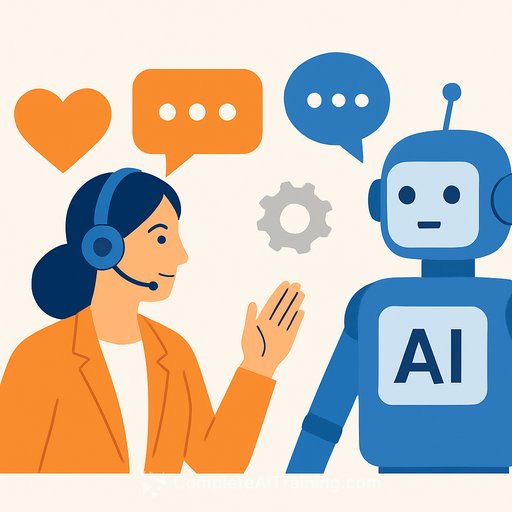
Here's the pattern that's sticking: AI resolves the simple stuff; people handle the messy stuff. In our field, that looks like this:
- Good AI candidates: password resets, order status, basic returns, knowledge lookups, FAQs.
- Human-required: billing disputes with edge cases, outages with cascading impact, trust/safety issues, multi-account entanglements, anything emotionally charged.
Leaders already feel this tension. In recent research, 40% said their top AI goal is to enhance customer experience, while 73% flagged customer resistance to AI interactions as a major roadblock. Translation: Customers want choice and a clean exit to a person when the bot stalls.
A new support architecture is forming
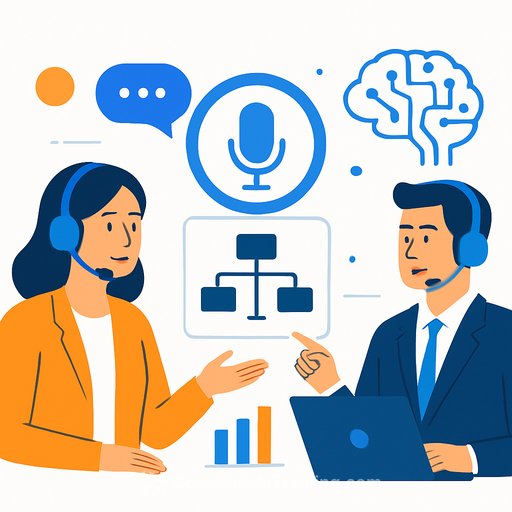
2026 is the break point. The old "one team handles everything" model gives way to a dual system that works in sync. AI agents handle high-volume, predictable tasks instantly. Human agents take the complex, judgment-heavy situations that define brand loyalty.
The magic isn't the split-it's the connective tissue between the two. You need routing that knows when to switch, learning loops that improve both sides and visibility across the whole flow. Here's a practical blueprint:
- Smart triage at intake: Classify intent, risk, emotional tone and data needs in under a second.
- Policy-driven routing: Define clear thresholds for when the bot owns it, when to co-pilot and when to hand off.
- Seamless handoff: Pass full context, reasoning and customer history to the human-no repeat questions.
- Knowledge as a service: One source of truth served to both bots and humans with versioning and approvals.
- Human-in-the-loop controls: Let agents edit AI drafts, approve refunds, override steps and feed corrections back.
- Quality and safety gates: Guardrails for compliance, PII handling, refund limits and tone.
- Learning loop: Use outcomes (CSAT, recontact, escalations) to retrain prompts and update policies weekly.
- Clear SLOs: Bot response time, bot containment rate, assisted FCR, handoff latency, time-to-resolution.
Reshoring and the new support role
As AI takes the repetitive work off the board, ticket mix shifts. More tickets require judgment, initiative and problem solving. That's where location starts to matter again-context, language nuance and proximity can improve outcomes on high-stakes cases.
Expect more teams to insource or reshore complex queues. What to hire for:
- Systems thinking: Ability to trace issues across tools, policies and edge cases.
- Business judgment: Make trade-offs that protect LTV and customer trust.
- Tool fluency: Comfortable co-working with AI, editing drafts and spotting hallucinations.
- Communication: Calm, clear language that de-escalates and sets expectations.
What to automate now-and what to protect
- Automate: Account access flows, shipping updates, appointment scheduling, knowledge replies, simple returns, data pulls.
- Assist (co-pilot): Draft replies, policy lookups, root-cause suggestions, refund calculations, step-by-step guides for agents.
- Keep human-led: High-dollar disputes, churn-risk saves, regulatory questions, outages, abuse/harassment cases, VIP handling.
Customer choice is non-negotiable
- Offer a visible "talk to a person" path within two turns.
- Label AI clearly; don't pretend it's human.
- Honor channel preference (email, chat, phone) for complex issues.
- Let customers rate both bot and human interactions; use it to tune routing.
Metrics that actually matter
- Containment with quality: Bot-contained rate paired with bot CSAT and recontact within 7 days.
- True resolution: First contact resolution and time-to-resolution, not just handle time.
- Trust signals: Complaint rate, escalation rate, churn after contact, NPS delta post-support.
- Cost-to-serve: Cost per resolved ticket by segment (bot-only, assisted, human-only).
90-day rollout plan
- Days 0-30: Map top 20 intents, define policies, build the triage/routing layer, stand up knowledge source with approvals.
- Days 31-60: Ship automation for the top five low-risk intents. Launch co-pilot in two queues. Add human override and audit logs.
- Days 61-90: Expand to 10-12 intents. Enable seamless handoff. Start weekly quality reviews with paired agent-AI feedback.
Tooling checklist (keep it simple)
- Routing and policy engine that speaks to your CRM.
- Unified knowledge base with version control and feedback.
- Agent co-pilot inside the agent desktop (no tab circus).
- Observability: transcript search, outcome tagging, prompt/version tracking.
- Compliance guardrails for PII, refunds and tone.
If your team needs structured upskilling for this shift, explore curated paths and role-based courses: AI courses by job. For learning programs and curriculum design, see the AI Learning Path for Training & Development Managers, and for governance and orchestration of AI adoption check the AI Learning Path for Training Coordinators.
The bottom line for 2026
AI is great at clean, rules-based work and fast responses. The moments that make or break loyalty are messy and human. The winning model blends both-automation for speed, people for judgment-wired together by smart routing, tight feedback loops and honest customer choice.
Keep the human where it counts. Let AI clear the runway. Loyalty is earned in how the experience feels-end to end.
Your membership also unlocks: