Machine Learning Optimizes Biochar's Carbon Capture Potential
Researchers have demonstrated that machine learning and natural language processing can significantly improve biochar's ability to sequester carbon, offering a practical tool for meeting climate targets. A new study analyzed nearly 1,800 scientific publications to map how artificial intelligence is being applied to biochar development and carbon capture.
Biochar is produced by heating agricultural waste and other biomass under low-oxygen conditions. When added to soil, it stores carbon for long periods while improving soil health, water retention, and nutrient availability.
The challenge has been optimization. Biochar's performance depends on multiple variables-feedstock type, production temperature, processing time, and environmental conditions. Testing each combination manually is time-consuming and costly.
Machine Learning Identifies Optimal Production Parameters
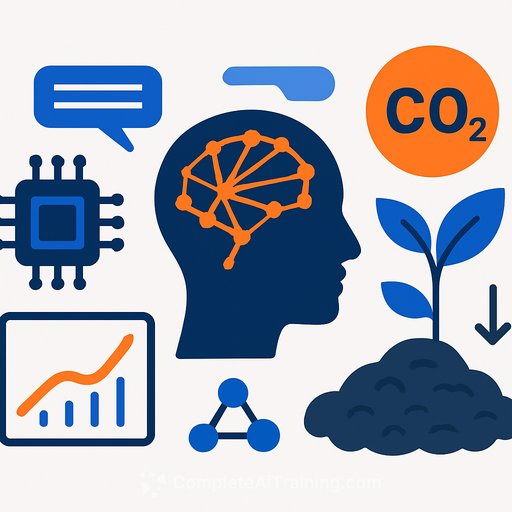
Machine learning algorithms can analyze complex datasets to predict how production parameters affect biochar's physical properties, particularly surface area and carbon stability. These properties directly determine how much carbon dioxide the material can absorb and store.
Some studies cited in the research show that AI-guided optimization can double biochar's carbon adsorption capacity under certain conditions. The algorithms identify patterns humans might miss across thousands of experiments.
Natural language processing adds efficiency by automatically extracting insights from scientific literature. Instead of manually reviewing thousands of papers, AI tools identify trends, key parameters, and research gaps. This capability accelerates discovery by pointing researchers toward promising directions.
Real-World Climate Impact
Beyond the laboratory, biochar offers measurable climate benefits. When applied to soil, it stabilizes carbon and influences microbial activity, reducing greenhouse gas emissions. Under sustainable deployment scenarios, biochar could offset up to 0.92 gigatons of carbon dioxide annually.
AI optimization expands these possibilities by enabling researchers to design biochar tailored to specific soils, climates, and agricultural systems. This precision approach maximizes both environmental and economic returns.
Scaling the Technology
Researchers emphasize the need for interactive platforms that integrate multiple AI models and scale these technologies for industrial use. The opportunity extends across the entire supply chain-from production optimization to field application decisions.
The fusion of biochar and machine learning represents a practical approach to converting agricultural waste into a climate mitigation tool. As nations work to meet emissions reduction targets, data-driven methods for optimizing biochar performance offer a concrete pathway forward.
Those working in research or data science roles may find value in understanding how machine learning applies to materials optimization. AI Research Courses and AI Data Analysis Courses cover the predictive modeling and pattern recognition techniques central to this work.
Your membership also unlocks: