
AI news ·
Marc Andreessen says OpenAI's medical AI makes fewer errors than human doctors
Marc Andreessen claims AI outperforms 99.99% of doctors after OpenAI's GPT-5.6 received fewer flaw ratings. U.S. hospitals are deploying these tools.
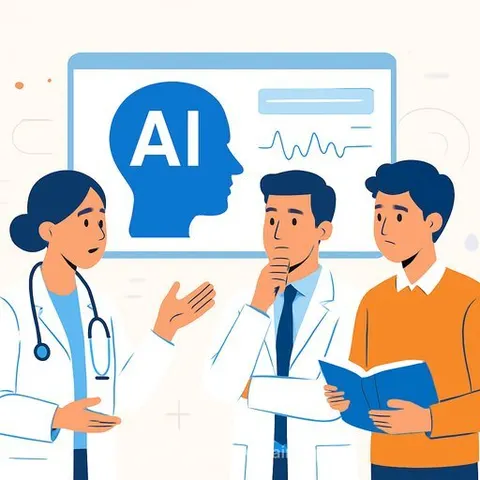
Venture capitalist Marc Andreessen said artificial intelligence already outperforms nearly all physicians after OpenAI reported that its latest model, GPT-5.6, produced medical responses clinicians rated less flawed than answers written by human doctors. The claim, posted on social media, arrives as health systems across the U.S. accelerate deployment of AI-powered patient tools.
Andreessen was reacting to an update from OpenAI CEO Sam Altman. "Physicians found fewer flaws in GPT-5.6 responses than physician-written responses," Altman said. Andreessen replied, "AI is already a better doctor than 99.99% of human doctors. This is good news."
How health systems are embedding AI
Major providers are weaving AI chatbots into patient-facing workflows. Hartford HealthCare launched Patient GPT from K Health, while Sutter Health and Reid Health rolled out Epic's Emmie platform. The tools operate inside HIPAA-protected environments, using electronic health records to support scheduling, medical information delivery, and physician tasks.
The Mayo Clinic partnered with Microsoft to blend clinical expertise and de-identified patient data with the company's AI and cloud capabilities, aiming to sharpen treatment decisions and outcomes. Cathie Wood, CEO of ARK Invest, said AI has a "profound application" in healthcare, pointing to its potential to speed medical research, diagnosis, and drug development. Healthcare professionals seeking to build skills around these tools can explore AI for Healthcare Courses designed for clinical adoption.
Why this matters for healthcare professionals
The GPT-5.6 finding does not mean AI can replace physician judgment. Real-world diagnosis relies on nuanced physical exams, patient histories, and ethical reasoning that language models cannot duplicate. The fast-paced rollout of chatbots across health systems puts a premium on clinicians who critically evaluate AI outputs and retain full accountability for care decisions. Understanding where these tools misfire - and where they genuinely assist - becomes a core skill for anyone practicing medicine alongside AI.