
AI news ·
Mark Cuban says healthcare conglomerates will use AI to delay and deny medical care
Mark Cuban warns healthcare conglomerates will deploy adversarial AI to block AI doctors. He claims middlemen consume 25% of physicians' time.
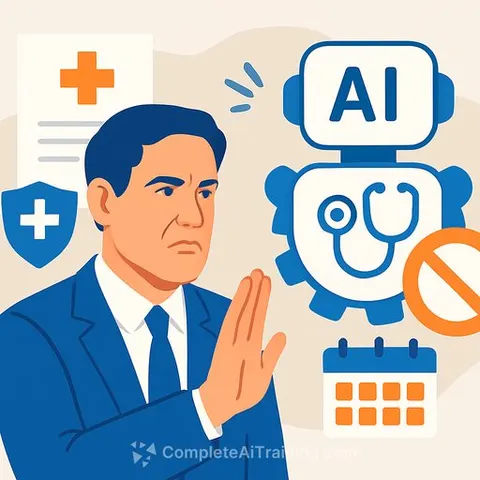
Mark Cuban warned Sunday that healthcare conglomerates will block the adoption of AI doctors, saying they have financial incentives to "delay and deny" progress. The billionaire investor, responding to venture capitalist Marc Andreessen's claim that AI already outperforms most human doctors, argued that insurers and pharmacy benefit managers (PBMs) will deploy adversarial AI agents to protect their margins.
The claim that sparked the debate
On Saturday, Andreessen endorsed an OpenAI finding that GPT-5.6 identified more medical errors in responses than human doctors did. He posted on X that AI is "already a better doctor than 99.99% of human doctors."
That prompted Cuban's response. He said employers, including Andreessen's own firm, lack visibility into the real cost of healthcare for their workers. "For every future agent we give AI doctors to deal with this friction, and to improve the quality of care, the conglomerates will have multiple adversarial agents doing all they can to delay and deny, to minimize their cost and maximize their float," Cuban wrote.
How middlemen stall AI adoption
Cuban claimed that doctors spend at least 25% of their time dealing with healthcare conglomerates, which he said make care more difficult and expensive for both physicians and patients. The real obstacle to AI in medicine, he argued, is not the technology but the intermediaries that profit from opacity.
He urged companies to stop working with those conglomerates. "Write agents that define, optimize and contract directly with providers, to eliminate the unnecessary middlemen," Cuban said.
AI adoption continues among patients
While industry leaders debate, patients are moving ahead. A West Health-Gallup survey in April found that 25% of U.S. adults have used AI tools or chatbots for health information or advice. For professionals exploring AI for Healthcare, the debate highlights the tension between technological potential and institutional barriers.
Why this matters for healthcare professionals
Healthcare professionals should watch the battle between AI developers and legacy conglomerates. Cuban's call for direct contracting with providers could reshape how AI tools reach clinical settings. If middlemen succeed in blocking AI adoption, the promised improvements in diagnostic accuracy and workflow efficiency may arrive later than the technology itself can deliver.