
AI news ·
Mark Zuckerberg acknowledges Meta's AI agent rollout hasn't met expectations
Meta's $145B AI investment hasn't delivered expected acceleration, Mark Zuckerberg told staff. The company cut 8,000 jobs and moved 7,000 others to AI units.
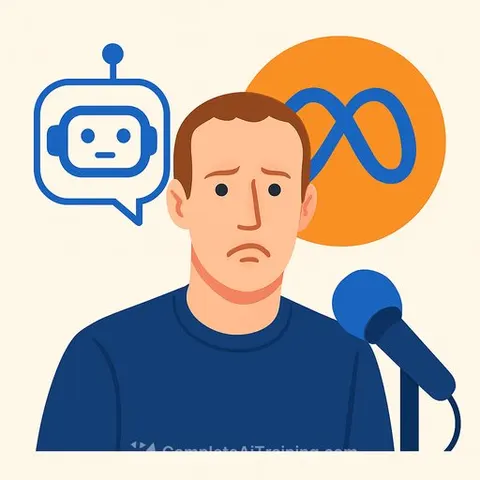
Meta CEO Mark Zuckerberg told employees at an internal town hall this week that the company's AI agents have not progressed as quickly as leadership expected, two months after cutting 8,000 jobs and reassigning 7,000 more to AI-focused roles. The admission follows a $145 billion AI infrastructure bet that has yet to deliver the acceleration executives counted on.
Admission After a $145 Billion Bet
Zuckerberg said "the trajectory of the agentic development over at least the last four months hasn't really accelerated in the way that we expected," adding that the restructuring bets "haven't come to fruition yet." He urged patience, suggesting meaningful benefits from Meta's AI investments could surface within three to six months.
Earlier this year, executives were "super optimistic" about tools like Claude Code from Anthropic as they planned the reorganization in January and February. That optimism was fueled by a fear that Meta wasn't moving fast enough - fear that now collides with slower-than-expected internal progress in AI Agents & Automation.
Restructuring 'Haven't Come to Fruition Yet'
The layoffs, which amounted to roughly 10% of Meta's global workforce, cut across teams while another 7,000 employees were moved into AI units. Zuckerberg acknowledged the reorganization wasn't as "clean" as it should have been and said executives miscalculated the timing. The internal reset is a real-world pressure test of executive assumptions - a scenario that often surfaces in AI for Executives & Strategy conversations about balancing bold bets with organizational readiness.
Mouse-Tracking Software and Morale Fallout
CTO Andrew Bosworth told staff a review found no employee data had been used in AI training through the company's paused mouse-tracking software. If the program restarts, Bosworth said it will use an opt-in model - a reversal from April, when US employees were told there was no way to opt out.
Internal friction is visible beyond the tracking tool. Bosworth previously called the rollout of Meta's Applied AI division "atrocious" in a memo reported by Wired. The 6,500-person unit, formed in March, has been described by staff as chaotic, with one employee calling it "a gulag." Bosworth pledged to cap managers at 20 direct reports and invest in career development and office perks to rebuild morale.
Why this matters for AI strategy leaders
Zuckerberg's frank assessment lands as a case study in timing high-stakes AI investments around immature agent capabilities. For executives mapping similar restructuring bets, the gap between executive optimism and the actual pace of AI tool maturation can splinter operational momentum. The episode shows how even the largest AI spenders can misjudge when infrastructure spending will translate into meaningful product acceleration, and how quickly workforce confidence can erode when transitions feel rushed or opaque.