
AI news ·
Maryland bill to integrate AI literacy into K-12 schools awaits Governor Moore's signature
Maryland's governor is weighing a bill that would require AI literacy instruction in all K-12 grades and mandate teacher training statewide. The Artificial Intelligence Ready Schools Act also calls for evaluating tools for safety and equity.
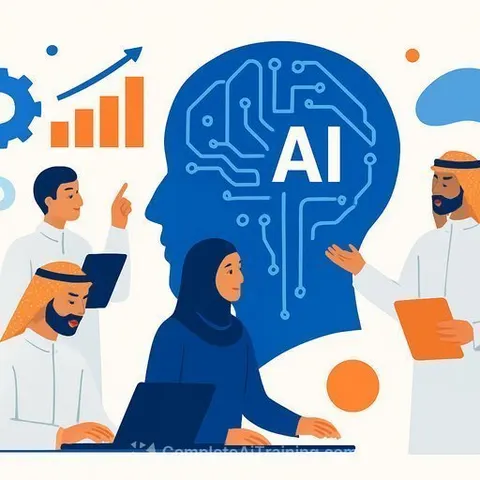
Maryland Bill Seeks to Integrate AI Into K-12 Education
Governor Wes Moore is considering legislation that would require Maryland schools to teach artificial intelligence literacy from kindergarten through high school and establish training requirements for educators.
The Artificial Intelligence Ready Schools Act creates a framework for schools to incorporate AI into daily instruction, develop statewide guidance, train teachers, and evaluate tools for safety and equity.
The Case for Change
The bill reflects a shift in what schools must teach. For decades, education centered on transferring information to students who would retain and reproduce it. That model assumed knowledge was stable and access to information was limited.
Neither assumption holds now. Information is abundant. AI systems like GPT have made clear that the tool itself has less value than the content that informs it. Models will evolve. Platforms will change. But the underlying ideas and intellectual frameworks remain the true source of advantage.
This means the ability to think, interpret, and apply knowledge matters more than the ability to access or reproduce it.
The bill addresses this by requiring AI literacy across all grade levels and mandating professional development for educators. It also connects AI training to workforce preparation standards, recognizing that skills developed in school must translate into economic opportunity.
What's Already Happening
The legislation builds on work already underway in Maryland. At STEM City Baltimore, middle and high school students recently participated in an AI bootcamp where they tested AI outputs, rebuilt weak prompts, and debated the ethical consequences of system design.
These students engaged with technology actively, not passively. They learned not only tools but also concepts like governance, bias, and accountability. Parents attended alongside them, asking about job pathways and how these skills lead to employment.
Industry professionals with backgrounds in enterprise AI and large-scale systems design shaped the program, ensuring instruction remained relevant rather than abstract.
The Implementation Challenge
Policy alone will not determine outcomes. The risk exists that without careful guidance, students will use AI tools in ways that reduce effort rather than deepen understanding.
The bill addresses this by emphasizing ethical use and responsible application. That emphasis must remain central to implementation.
Success also requires extending the model beyond K-12 to include upskilling and retraining across the workforce. Education must shift from a fixed period of life to a continuous process that extends from early childhood through retirement.
Maryland's Position
The state has institutional capacity and proximity to federal innovation ecosystems. What is required is alignment between policy, practice, and purpose.
The states that move early and thoughtfully will define the terms of the future. Those that wait will adapt to frameworks created by others.
For educators, the decision ahead is significant. The bill provides a foundation. Whether it supports a system that helps students understand, guide, and apply technology-rather than simply use it-depends on how schools implement the requirements.
Learn more about AI for Education and explore how educators can prepare students for an AI-driven world. Teachers looking to build their own expertise can access the AI Learning Path for Teachers.