The Challenges of Mass Communication Education in Pakistan
Mass communication education in Pakistan faces a critical challenge: the gap between rapid technological advances and slow academic adaptation. While digital media reshapes journalism, public relations, and advertising globally, many Pakistani media faculties lack clear policies or curricula addressing digital and AI-driven changes. Teaching students basic social media use or video editing is often mistaken for digital media education, but the reality demands much deeper integration.
Global Best Practices: Where Pakistan Is Falling Behind
Leading journalism schools worldwide have updated their programs to include digital storytelling, coding, AI ethics, data journalism, and audience analytics. Institutions like the Craig Newmark Graduate School of Journalism (USA), Sciences Po (France), and the University of Hong Kong have created innovation labs and interdisciplinary programs, collaborating with tech firms and conducting research on media’s digital transformation.
Meanwhile, Pakistani media schools often struggle with basic infrastructure issues, such as providing high-speed internet in classrooms. Without strategic reforms, graduates risk entering a media landscape they are not prepared for.
The Infrastructure Gap
Bridging Pakistan’s Education Gap: AI, Digital Learning, And The Future Of Inclusion
Many public universities lack access to modern media labs, podcast studios, and data analytics tools. Faculty and students are often unfamiliar with learning management systems, AI tools like GPT, or licensed software such as Adobe Firefly. Outdated or pirated editing software is common, which undermines both innovation and ethical training.
Essential equipment like DSLR cameras or mobile reporting kits are either unavailable or reserved only for thesis projects. Without this baseline infrastructure, students graduate without hands-on experience with tools essential to the global media job market.
The Mindset Deficit
The bigger issue lies in attitude. Many faculty members are uncomfortable with technology and AI, leading to resistance against change and little motivation for retraining. Course syllabi often remain unchanged for years, and “digital media” education is reduced to PowerPoint presentations or basic social media awareness.
Interdisciplinary collaboration is rare, despite digital media’s demand for joint work between journalism, computer science, design, and business. This siloed approach isolates mass communication departments from other knowledge centers on campus.
AI in Media Education: The Missed Opportunity
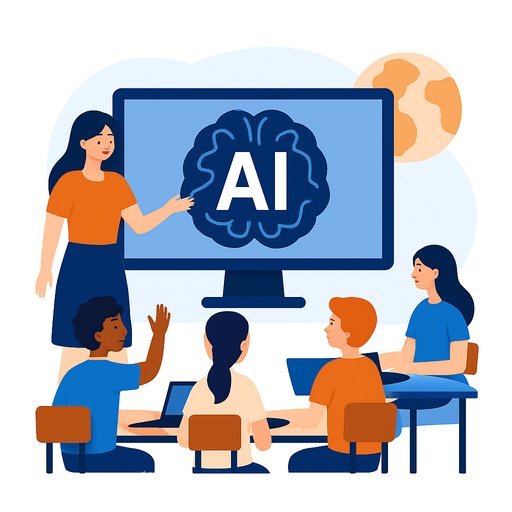
Artificial Intelligence is reshaping media workflows globally—automating scriptwriting, detecting fake news, personalizing content, and real-time translation. Countries like the US, UK, and China debate AI ethics openly, but Pakistani media education remains silent on these issues.
Few students graduate understanding how algorithms influence media exposure, how deepfakes threaten trust, or how AI chatbots assist newsrooms. Introducing AI literacy, machine learning, and ethical journalism modules can prepare students to work effectively with technology. Practical training with tools such as ChatGPT, Synthesia, or Descript can transform learning—provided educators receive the necessary training first.
Policy Vacuum and Institutional Stagnation
The absence of policy is a major obstacle. No Pakistani mass communication faculty has developed a comprehensive digital media education framework for the AI era. Curriculum committees meet infrequently and focus more on bureaucracy than innovation.
There is no national coordination by bodies like the Higher Education Commission (HEC) or journalism associations to assess needs, identify skill gaps, or forecast future demands. Indian and South African universities offer valuable examples where national guidelines and community-focused curriculum mapping have improved media education.
Pakistan urgently needs a consortium of educators and media professionals to create a national roadmap that aligns academic programs with both global trends and local realities.
Recommendations: Moving Forward Strategically
- Develop a National Digital Media Education Policy: Joint efforts by universities, the HEC, and media councils to address AI integration, curriculum reform, and infrastructure.
- Curriculum Overhaul: Mandatory courses on AI and media, data journalism, coding for communicators, podcasting, media entrepreneurship, and digital ethics.
- Faculty Capacity Building: National training programs, short courses, and certifications to upskill faculty in digital tools and research methods.
- Digital Labs and Equipment: Investment in media innovation labs with high-speed internet, modern hardware, and licensed software.
- Encourage Interdisciplinary Collaboration: Promote joint degrees, research projects, and hackathons involving journalism, computer science, design, and business students.
- Promote Research and Publication: Funding for academic and policy research on AI’s impact on Pakistani media industries and journalism ethics.
- Create Industry Linkages: Facilitate student internships, faculty-industry collaborations, and digital storytelling projects with media houses, tech firms, and NGOs.
- Multilingual Digital Literacy: Develop AI tools and training content in Urdu and regional languages to boost access and participation.
Mass communication education in Pakistan stands at a crossroads. Continuing with outdated approaches will leave graduates unprepared. Bold, strategic reform can empower educators and students to thrive in a digital media environment grounded in local context. For those interested in AI-focused learning, exploring resources like Complete AI Training’s latest courses can offer practical skills aligned with industry needs.
Your membership also unlocks: