Massachusetts rolls out ChatGPT Enterprise to 40,000 state employees - here's what matters for customer support and government teams
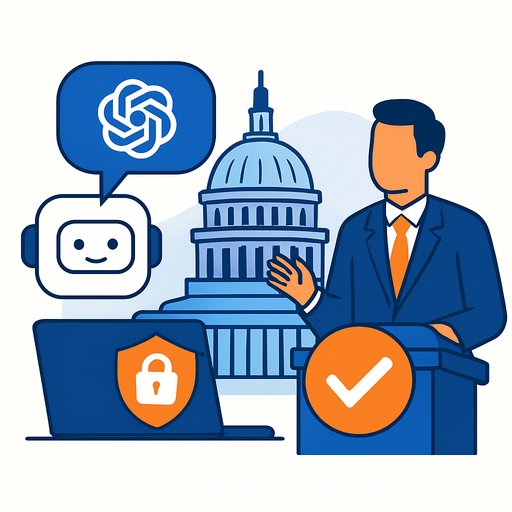
At a Boston event kicking off the new Massachusetts AI Coalition, Gov. Maura Healey announced the state will deploy ChatGPT Enterprise across the entire executive branch. The rollout starts today inside the Office of Technology Services and Security (OTSS), then expands to other departments. Training is required before any employee gets access, according to Jason Snyder, secretary of OTSS.
The state signed a three-year agreement with OpenAI at $108 per employee per year, totaling about $4.3 million annually. ChatGPT Enterprise encrypts data in transit and at rest and commits that your data won't be used to train OpenAI's future models.
What this means for frontline service and operations
- Faster first drafts of emails, letters, knowledge articles, and case notes.
- Summaries of long constituent emails and call transcripts in plain language.
- Clearer explanations of policies and benefits for residents.
- Translation support for top languages to reduce back-and-forth.
- Structured checklists, SOPs, and templates that keep responses consistent.
- First-pass reviews of RFPs, grants, and proposals to highlight issues to a human reviewer.
- Prototype internal tools with Codex (OpenAI's coding tech) - see AI Coding Courses for practical guidance - to cut manual work.
Access, training, and rollout
- Phase 1: OTSS workers get access after completing mandatory training.
- Phase 2: Additional departments come online based on readiness and use cases.
- Each team should identify 2-3 pilot workflows with clear outcomes (e.g., reduce average handle time, clear backlogs, improve plain-language quality).
Security, privacy, and policy basics
- Use the Enterprise workspace provided by the state. Don't move sensitive work to personal accounts.
- Follow data-classification rules. Only include PII or confidential data if policy says it's allowed for Enterprise use.
- Fact-check model outputs for legal, medical, or policy content. Keep a human in the loop.
- Log material AI assistance in the case record when it affects decisions or resident communications.
- Use approved prompts and style guides to maintain consistent voice and compliance.
For a high-level look at Enterprise security controls, see OpenAI's security overview.
Prompts that work for government customer support
- "Summarize this constituent email in 5 bullet points, then propose a 3-paragraph reply in plain language at an 8th-grade reading level."
- "Draft a benefits explanation that covers eligibility, required documents, deadlines, and the next three steps. Keep it under 200 words."
- "Translate this response into Spanish and Portuguese. Preserve dates and numbers."
- "Review this draft for clarity, accessible language, and tone. Suggest edits inline."
- "Create a checklist to process [request type], including data fields to capture and handoff steps."
How to prep your team this month
- Complete the state's mandatory training and document any unit-specific add-ons (privacy, records retention, accessibility).
- Build a quick prompt library for your top 10 ticket types. Store examples your team can reuse.
- Define acceptance criteria: what "good" looks like for replies, summaries, and translations.
- Set a QA rhythm (e.g., 5% random review) and a fast feedback loop to update prompts and SOPs.
Measure impact that matters
- Speed: average handle time, time-to-first-response, backlog days.
- Quality: readability, error rates, policy compliance, translation accuracy.
- Resident outcomes: first-contact resolution, CSAT, complaint volume.
- Team health: after-hours work, context-switching, time spent on admin tasks.
Context from the announcement
Sam Altman appeared via video to support the rollout and highlighted use cases like document drafting, proposal review, and building simple tools with Codex. He stressed keeping data secure and building trust in systems that show good judgment, with humans supervising final decisions.
The event also launched the Massachusetts AI Coalition at Whoop's Kenmore Square headquarters. The coalition plans 100 events this year and includes companies like Suno (AI music), Toast (restaurant tech), and 7AI (cybersecurity). Several AI firms, including Anthropic and xAI, have started hiring in Massachusetts, though OpenAI has not opened an office in the state.
Gov. Healey made a friendly pitch for Altman to return to Massachusetts. Altman noted he started his first company in Cambridge through Y Combinator and called California home, while still praising Massachusetts.
Optional upskilling resources
- Self-paced paths by role for public-sector teams: Courses by job
- Deepen ChatGPT skills with practical workflows: ChatGPT training resources
Bottom line: this rollout is about better government service-faster delivery, clearer communication, and improved results-backed by training, guardrails, and measurable outcomes.
Your membership also unlocks: