Researchers Map Immune Structures in Tumors to Predict Cancer Outcomes
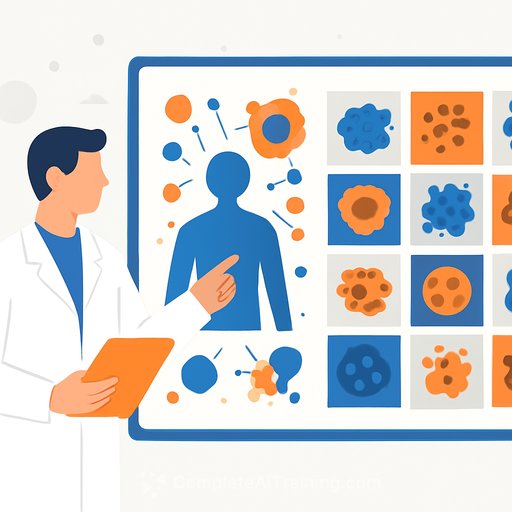
Scientists at The University of Texas MD Anderson Cancer Center have created the first spatial atlas of tertiary lymphoid structures (TLSs) across multiple cancer types, revealing that the maturity and location of these immune hubs within tumors can predict patient prognosis and treatment response. The work, published in Science, used artificial intelligence to analyze 340 tumor samples from 12 cancer types.
TLSs are organized clusters where immune cells-B cells, T cells, and antigen-presenting cells-gather to coordinate attacks on cancer. Previous research showed that their presence correlates with better outcomes, but the new study demonstrates that presence alone is insufficient.
What the atlas reveals
The research team developed AI frameworks to detect and classify TLSs from spatial omics data and routine pathology slides. They found that TLS maturation varies substantially across tissue types. As TLSs mature, they become more organized and show coordinated changes in immune, stromal, and vascular components.
Location matters. The proximity of TLSs to tumor cells correlates with specific tumor signaling patterns, suggesting that spatial context reflects important features of the tumor immune environment.
The researchers analyzed over 25,000 TLSs from more than 3,000 whole-slide images across 10 independent cohorts. They developed a composite scoring system that captures both the number of TLSs in a tumor and their maturation states.
Clinical translation
This composite score outperformed conventional TLS measures in stratifying patients by prognosis and treatment response. Because the AI framework works with routine pathology images already used in clinical practice, the approach is designed for practical adoption in hospitals and diagnostic labs.
The next step is validation in prospective clinical trials. If successful, TLS profiling could become part of standard pathology workflows.
Open questions
The study revealed that many TLSs remain immature and some are located away from tumor regions. This raises a therapeutic question: can clinicians promote TLS maturation or improve their spatial positioning relative to tumor cells?
Researchers say future work should investigate how to enhance TLS formation and function as a potential treatment strategy to strengthen anti-tumor immune responses.
For professionals working in cancer research or computational oncology, understanding TLS biology and AI-based detection methods is increasingly relevant. AI Research Courses and AI Data Analysis Courses cover the computational frameworks and spatial analysis techniques that underpin this type of research.
Your membership also unlocks: