
AI news ·
Meeting planners use AI to build venue shortlists before hotels ever receive an RFP
Meeting planners are using AI to build venue shortlists before contacting any hotel-properties with vague websites simply don't appear. Missing specs like door widths or load-in details means no rejection; you just never surface.
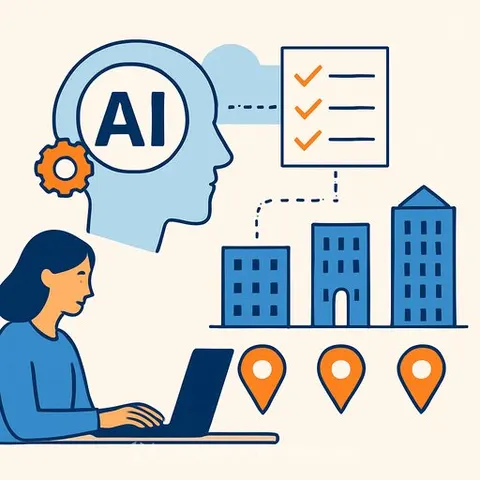
Meeting Planners Now Filter Hotel Shortlists With AI Before Contacting Sales Teams
Hotels with vague websites are being silently excluded from consideration before the RFP process even begins. Meeting planners are using AI to build venue shortlists in minutes, and properties that can't be understood by algorithms simply don't appear in the results.
The shift is happening upstream, before any salesperson gets involved. No introduction. No site visit. No follow-up email. If your hotel isn't digitally legible to the tools doing the sorting, you don't get rejected-you never surface at all.
The Old Sourcing Process Is Gone
Venue sourcing used to mean opening ten browser tabs, cross-referencing multiple platforms, and calling hotels to clarify basic operational questions that should have been online. It was slow and manual.
Now planners feed AI a list of specific event criteria and generate viable options in minutes. A planner might need to physically drive equipment into a ballroom-which requires knowing load-in access, elevator dimensions, ballroom entry width, dock accessibility, and ceiling clearance. Most hotels don't publish this information. AI surfaces the ones that do.
The properties winning attention aren't necessarily the best. They're the clearest.
Vague Marketing Language Doesn't Work Anymore
Hospitality marketing relies on approximations: "Close to the convention center." "Minutes from downtown." "Conveniently located." AI doesn't interpret marketing language emotionally-it interprets it literally.
If your website says "spacious ballroom" but never lists dimensions, capacities, or technical specs, AI has nothing useful to work with. Your competitor with the detailed floor plan gets shortlisted instead. Not because they're better. Because they're findable.
The Shortlist Is Built Before the RFP Arrives
By the time a planner reaches out, they've often already run your property through AI, reviewed your online reputation, checked LinkedIn, validated your operational credibility, and formed an opinion about your team. Without ever speaking to you.
Your website now trains the systems humans use to decide whether you're credible. The internet has become the pre-site-visit.
LinkedIn Is Now Part of Your Discoverability Infrastructure
Many hotel salespeople treat LinkedIn as optional. It isn't. Studies show LinkedIn is becoming one of the most-cited sources inside AI-generated professional recommendations.
If your sales team has no visible digital presence, planners interpret that absence as risk. They're evaluating the responsiveness of your team, the expertise of your salesperson, and whether the relationship feels trustworthy before first contact.
Speed Now Signals Competence
Meeting planners expect fast turnarounds. If they can generate preliminary venue intelligence in two minutes, a hotel taking three days to answer basic operational questions feels broken.
Responsiveness shapes perceived competence. Slow response times don't just create inconvenience-they create doubt. And doubt kills shortlist placement.
What Hotels Need to Do Now
Hotels winning AI-assisted searches are publishing consistently and answering operational questions publicly. They're:
- Listing specific venue details: door widths, internet capacity, floorplans, load-in logistics, ceiling heights
- Publishing walk times and transportation details
- Creating content planners actually need
- Empowering sales teams to build visible expertise
- Reducing ambiguity in every operational description
- Building trust before outreach begins
Your website isn't just a brochure anymore. It's either training AI to shortlist your property or training AI to ignore it. There's no middle ground left.
If your hotel isn't answering the questions planners are feeding into AI, you're already being filtered out-not because your property isn't good, but because your digital presence isn't useful enough to survive the sort.
Learn more about AI for Hospitality & Events to understand how these tools are reshaping venue sourcing and sales strategies.