
AI news ·
Meta and Microsoft cut nearly 17,000 jobs as AI automates work once done by large teams
Meta cut 8,000 workers and Microsoft offered buyouts to 8,750 employees in back-to-back announcements tied to AI spending. The tech sector has shed 92,000 jobs in 2026 so far.
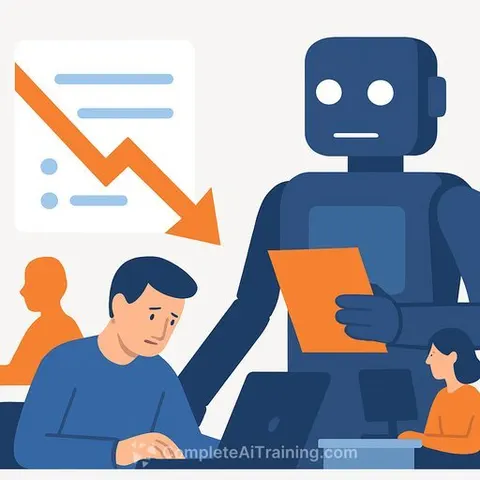
Meta and Microsoft Cut Thousands as AI Automation Reshapes Tech Workforce
Meta laid off 10 percent of its global workforce-approximately 8,000 workers-on Thursday, while Microsoft simultaneously offered voluntary buyouts to around 8,750 US employees. The back-to-back announcements signal that AI-driven efficiency is now translating into structural job losses rather than temporary market corrections.
Meta's memo linked the cuts directly to funding its AI ambitions. The company plans to spend between $162 billion and $169 billion on AI infrastructure in 2026 alone. Chief executive Mark Zuckerberg said in January that 2026 would be "the year that AI starts to dramatically change the way that we work," framing efficiency gains as operational necessity. The cuts begin May 20.
Microsoft's move marks the company's first voluntary buyout program in 51 years. Chief people officer Amy Coleman described it as giving eligible employees "the choice to take that next step on their own terms, with generous company support." Initial offers are expected in early May.
The Numbers Behind the Shift
The productivity gains are measurable. GitHub Copilot, Microsoft's coding assistant, now writes approximately 40 percent of code in repositories where it has been deployed. This isn't theoretical efficiency-it's automation that removes the need for human labor on specific tasks.
The broader tech sector has shed 92,000 workers in 2026 alone, according to Layoffs.fyi. Since 2020, the technology industry has eliminated nearly 900,000 jobs. These figures place Meta and Microsoft's cuts within a larger structural transformation, not isolated corporate decisions.
The Skills Problem
A 2026 Motion Recruitment study reveals a critical mismatch: AI adoption is slowing hiring for entry-level and general IT roles-positions most accessible to workers without specialized credentials. Meanwhile, AI engineering roles remain in high demand. This gap cannot be closed through retraining alone.
Anthony Tuggle, an executive coach with an AI background, told CNBC: "This represents a fundamental structural shift rather than a temporary market correction. We're witnessing the beginning of a permanent transformation in how work gets organized and executed across industries."
What Operations Professionals Should Know
For operations teams, the implications are direct. AI Agents & Automation are eliminating tasks that previously required large teams. This affects staffing models, project planning, and resource allocation.
Operations managers should understand how their organizations are using AI to automate workflows. The question is no longer whether this will happen-it's already happening-but how your team adapts. An AI Learning Path for Operations Managers can help you understand the tools reshaping your function and prepare for the structural changes ahead.
Rajat Bhageria, CEO of physical AI startup Chef Robotics, offered a measured perspective: "We're only starting to understand how much of our daily work AI can handle for us across all different kinds of jobs." He acknowledged genuine uncertainty about what jobs AI will create, but the displacement happening now is clear.