
AI news ·
Meta employees sue company over AI layoffs targeting workers on medical and parental leave
Twenty-six Meta workers sued over AI-selected layoffs of 8,000 staff, alleging the system targeted those on protected leave. The suit claims algorithms penalized these absences.
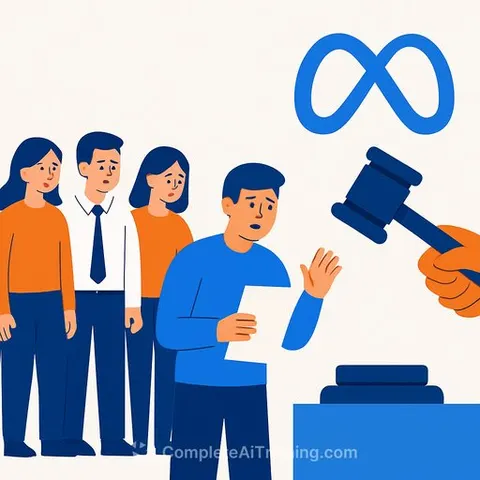
A group of 26 Meta Platforms Inc. employees filed a lawsuit late Monday in federal court in Oakland, Calif., claiming the company used artificial intelligence systems to select people for layoffs, disproportionately targeting those on medical, parental or family leave. The separations are set to begin July 22, and the case raises urgent compliance questions for HR departments deploying AI in workforce reductions.
The employees are among the 8,000 workers - about 10% of Meta's workforce - the company said it would lay off in May. The lawsuit alleges Meta used internal AI systems, keystroke and activity-monitoring data, AI token-usage dashboards, and algorithmically assisted performance rankings to decide who would be cut. Meta said in a statement that the claims "lack merit and are not based on facts. Workforce management and organizational decisions were and are made by people, not AI."
How the AI selection process allegedly penalized leave
The complaint argues that many of these scores and ratings "by design, cannot be accumulated by an employee who is on protected medical or family leave, or whose output is reduced by a disability." Meta, according to the lawsuit, did not account for protected leave when evaluating scores and did not pause the system for the individualized review the law requires. One employee with a serious health condition was discouraged by a manager from taking leave, warned that doing so would result in his selection for the layoffs. Meta offered no accommodation for his disability, the lawsuit says.
About half the plaintiffs took leave for caregiving or pregnancy-related reasons. Eight women had taken maternity or pregnancy-related leave, four men took parental leave, and one woman took leave to care for a family member and later bereavement leave. The suit contends that the algorithmically assisted selection process, by systematically recording such absences as reduced performance, falls more heavily on women, who disproportionately take pregnancy and caregiving leave.
Legal violations and the disparate impact argument
The lawsuit alleges violations of the Family and Medical Leave Act, the Americans with Disabilities Act, the Pregnancy Discrimination Act, and the Pregnant Workers Fairness Act. It also invokes disparate impact liability under Title VII of the 1964 Civil Rights Act - a doctrine holding that facially neutral policies can be discriminatory if they disproportionately burden a protected class without job-related necessity.
The Trump administration has moved to abandon disparate impact enforcement, ordering agencies to deprioritize it and arguing it undermines meritocracy. Despite that shift, the Meta case demonstrates that companies remain vulnerable to such litigation when AI systems produce biased outcomes. Workers can still pursue disparate impact claims on their own if the EEOC rejects their complaints, and several state laws specifically prohibit the practice.
The plaintiffs' lawyers are seeking to preserve the status quo pending arbitration, arguing that "once these separations are final, the harms are irreversible: employer-subsidized health coverage lost during pregnancy, postpartum recovery, and active medical treatment; time-bound leave rights extinguished; unvested equity forfeited; and immigration consequences triggered."
Why this matters for HR professionals
This lawsuit signals that HR leaders cannot assume AI vendors or internal algorithms will automatically comply with leave and anti-discrimination laws. Any automated performance scoring or layoff selection tool must be audited for disparate impact on protected groups, especially when it uses activity metrics that inherently disadvantage employees on leave. For HR teams integrating AI into workforce decisions, understanding these legal risks is critical. Resources that cover AI for Human Resources can help professionals build governance frameworks that align with both operational goals and compliance obligations.