
AI news ·
Meta is the only major US AI developer without a voluntary security review agreement with the Trump administration
Meta lacks a voluntary agreement for 30-day government security reviews of new AI models. Officials want it to join five rivals in giving the Commerce Department advance access.
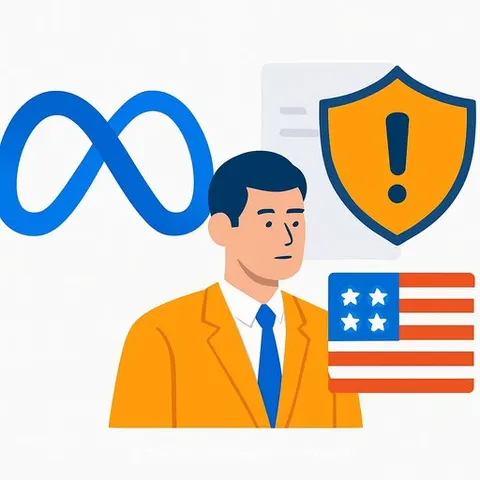
Meta has become the sole major U.S. AI developer without a voluntary agreement to submit new artificial intelligence models to the Trump administration for security review before public release, The New York Times reported. Officials are pressing the company to join OpenAI, Anthropic, Google, xAI, and Microsoft in giving the Center for AI Standards and Innovation advance access for national-security evaluations.
The voluntary arrangement stemmed from an executive order President Donald Trump signed on June 2. The order creates a structure where federal officials can get as many as 30 days to assess AI models ahead of any release to trusted partners. It also directs development of a classified benchmarking process to gauge advanced AI capabilities, but it imposes no mandatory licensing or preclearance requirements.
Meta spokesperson Francis Brennan told the Times the company shares the administration's goal of advancing U.S. leadership on "secure frontier AI" and expects to reach an agreement. "While we are working through the details, we hope to sign the agreement soon," Brennan said.
Commerce Secretary Howard Lutnick oversees the Center for AI Standards and Innovation, which is housed within the Commerce Department. Commerce spokesman Ben Kass confirmed the center engages companies about the voluntary agreements. The administration's push for model reviews arrives amid deepening Washington concern over AI security.
Meta released its most recent model, Muse Spark, in April. Unlike the open-source Llama series the company built its reputation on, Muse Spark keeps its underlying code proprietary.
Why this matters for Government Professionals
The negotiations show how AI governance is evolving through executive action rather than legislation, creating a patchwork of voluntary commitments. For agency staff and policy analysts, the model-review framework signals where compliance expectations may eventually harden. Understanding these early voluntary structures can help teams anticipate future reporting or evaluation duties. Professionals can build that foundation through resources like the AI Learning Path for Policy Makers and by tracking updates under the AI for Government tag.